- English
- French
- German
- Portuguese
- Spanish
- Russian
- Japanese
- Korean
- Arabic
- Greek
- German
- Turkish
- Italian
- Danish
- Romanian
- Indonesian
- Czech
- Afrikaans
- Swedish
- Polish
- Basque
- Catalan
- Esperanto
- Hindi
- Lao
- Albanian
- Amharic
- Armenian
- Azerbaijani
- Belarusian
- Bengali
- Bosnian
- Bulgarian
- Cebuano
- Chichewa
- Corsican
- Croatian
- Dutch
- Estonian
- Filipino
- Finnish
- Frisian
- Galician
- Georgian
- Gujarati
- Haitian
- Hausa
- Hawaiian
- Hebrew
- Hmong
- Hungarian
- Icelandic
- Igbo
- Javanese
- Kannada
- Kazakh
- Khmer
- Kurdish
- Kyrgyz
- Latin
- Latvian
- Lithuanian
- Luxembou..
- Macedonian
- Malagasy
- Malay
- Malayalam
- Maltese
- Maori
- Marathi
- Mongolian
- Burmese
- Nepali
- Norwegian
- Pashto
- Persian
- Punjabi
- Serbian
- Sesotho
- Sinhala
- Slovak
- Slovenian
- Somali
- Samoan
- Scots Gaelic
- Shona
- Sindhi
- Sundanese
- Swahili
- Tajik
- Tamil
- Telugu
- Thai
- Ukrainian
- Urdu
- Uzbek
- Vietnamese
- Welsh
- Xhosa
- Yiddish
- Yoruba
- Zulu
Tea Leaf Extract Uses in Skincare and Supplements
Camellia sinensis, which is used to make Tea Leaf Extract, is now needed by companies that make nutraceuticals, cosmetics, and useful foods. This natural ingredient is full of catechins, flavonoids, and EGCG (epigallocatechin gallate), which are all powerful antioxidants that help fight inflammation and improve metabolism. Whether you're making weight loss pills or serums to fight aging, knowing where to find, how to mix, and where to put high-quality extracts can make your products stand out. This piece talks about applications, procurement strategies, and supplier selection factors that are based on evidence to help B2B buyers make smart choices.
Understanding Tea Leaf Extract: Composition and Health Benefits
Rich Bioactive Profile for Versatile Applications
The Tea Leaf Extract comes from Camellia sinensis leaves and is high in powerful catechins, especially EGCG, EGC, EC, and ECG. In top types, these catechins make up up to 98% of the pure substance. Polyphenols make up most of the mixture and have strong antioxidant properties, as shown by ORAC values above 1,500 µmol TE/g. These chemicals get rid of free radicals, which lowers oxidative stress linked to age, metabolic diseases, and long-term inflammation. Flavonoids improve the health of blood vessels and protect cells even more, making the extract a good choice for supplement claims that protect the heart and brain.
Scientifically Validated Health Benefits
Studies in humans have shown that EGCG does change metabolic processes. According to a study in the American Journal of Clinical Nutrition, taking 500 mg of catechins every day makes modest exercise burn 17% more fat. Downregulating NF-κB pathways is a part of anti-inflammatory processes. This lowers the production of cytokines that cause skin discomfort and systemic inflammation. Because EGCG can cross the blood-brain barrier, it has neuroprotective benefits, meaning that it could be used in cognitive health products for older people.
Tea Leaf Extract in Skincare: Applications and Benefits
Anti-Aging and Antioxidant Defense
More and more cosmetics use antioxidants from green tea to fight photoaging caused by UV light and pollution in the environment. EGCG stops the collagenase and elastase enzymes that break down the extracellular matrix, which keeps the skin's flexibility. A 2019 study in the Journal of Dermatological Science found that using 1% EGCG on the skin for 12 weeks reduced the depth of wrinkles by 25%. This antioxidant action also lightens hyperpigmentation by stopping tyrosinase activity, making Tea Leaf Extract a two-in-one treatment for age spots Tea Leaf Extract and tone improvement.
Soothing Properties for Sensitive Skin
Catechins are anti-inflammatory chemicals that calm the heat and itchiness that come with eczema, acne, and rosacea. Formulations with tea polyphenols reduce flare-ups by changing inflammatory chemicals like TNF-α and IL-6. These work without making the skin more sensitive like manmade actives do. Organic certifications and non-GMO extracts are used by brands that want to appeal to people who like clean beauty products to meet the market's desire for clear ingredient sources.
Tea Leaf Extract in Dietary Supplements: Trends and Procurement Insights
Growing Demand for Natural Weight Management Ingredients
Weight control pills featuring Tea Leaf Extract are the most common type of dietary supplement. Catechins increase thermogenesis and fat oxidation, which is backed by meta-analyses that show that when mixed with exercise, people lose an average of 1.3 kg over 12 weeks. Sports nutrition companies make pre-workout powders with 300 to 500 mg of EGCG to help athletes who care about their health and want plant-based performance boosters burn more calories without getting the jitters.
Popular Supplement Formats and Delivery Systems
Capsules and pills are still very common because they are easy to use and give accurate doses. Powders can be used to make functional drinks and protein mixes with different dose sizes. When compared to normal powders, liquid formats, such as nano-emulsified solutions, improve bioavailability by up to 40% through better absorption in the gut. Manufacturers should choose a format based on what their target customers want and how long they need the product to last. Powders usually stay stable for 24 months when stored in moisture-barrier packaging.
How to Choose the Right Tea Leaf Extract Supplier: A B2B Buying Guide
Defining Quality Standards and Specifications
It is important for procurement teams to set strict requirements for Tea Leaf Extract, such as EGCG purity of at least 90%, moisture content of less than 5% (which can be checked using Karl Fischer titration), and particle size distribution that works well for pill filling or liquid dissolution. Asking for COAs from several production runs shows that the products are consistent; ±3% for active content and ±2% for moisture is an accepted range of difference. Suppliers who use HPLC (High-Performance Liquid Chromatography) for catechin testing show the scientific rigor that is needed for quality that can be repeated.
Verifying Supplier Credentials and Certifications
Reliable providers keep their FDA registration, KOSHER, HALAL, and ISO22000 approvals, which show that they follow international quality standards. Site audits or inspection reports from a third party (like Intertek or SGS) confirm that production settings are clean (Grade 100,000 or higher), which is very important for keeping germs from spreading. Suppliers who offer OEM/ODM customization should show samples that show they understand regulations in all of their target markets, such as Novel Food compliance for EU applications or GRAS status for US ones.
Integrating Tea Leaf Extract into Your Product Line: Strategic Recommendations
Market Trends and Consumer Preferences
More and more, people in North America want clean-label vitamins that come from clear sources and have few fillers. The Council for Responsible Nutrition did a study in 2023 and found that 68% of supplement users want plant-based antioxidants, making Tea Leaf Extract a good choice. Skincare markets in the US and Europe like anti-pollution formulas because tea polyphenols protect against particulate matter, which is something that urban consumers care about.
Regulatory Compliance and Labeling Requirements
According to FDA rules, Supplement Facts screens must accurately list the amount of EGCG that is in the product. This can only be done by using approved HPLC methods for analysis. EU Novel Food law covers highly pure extracts that are more than what people usually eat. Suppliers should include regulatory dossiers that prove waivers or approvals. Cosmetics must follow the INCI (International Nomenclature of Cosmetic Ingredients) lists, which usually say "Camellia Sinensis Leaf Extract" and give concentration amounts for testing for allergens.
Customization for Brand Differentiation
Private label production lets you make formulations that are exactly what your Tea Leaf Extract brand stands for. When you mix EGCG with ingredients that work well together, like L-theanine for brain supplements or hyaluronic acid for anti-aging serums, you get unique blends. Different ways of distributing goods can use custom packing, such as 100-count bottles or large powder packages. Formulation development services from suppliers help with finding the best amounts and tests for stability, which shortens the time needed for R&D.
Case Studies: Successful Brand Integrations
A nutraceutical brand from the US worked with an authorized source to release a thermogenic tablet with 400 mg of EGCG and green coffee extract. Within six months, the SKU gained 12% of the weight management market. This was possible because the amounts were backed by clinical evidence, and the package had seals from third-party testing agencies. Additionally, a European skin care line released a 1.5% EGCG serum aimed at protecting against pollution, which led to a 35% repeat buy rate due to users reporting an obvious improvement in their skin's dullness and pore clarity.
Conclusion
Adding Tea Leaf Extract to your product line can give you measured benefits in the supplement and skin care areas. From anti-aging serums that use EGCG's collagen-protecting properties to thermogenic pills that support metabolic health, this plant ingredient meets the needs of consumers for natural products that are based on evidence. Verifying suppliers, making sure high standards are met, and following the rules are all important parts of successful buying. Brands can speed up innovation while keeping high-quality standards by working with makers that offer approved organic extracts, flexible customization, and quick shipping. By using market trends and clinical proof to guide your strategic integration, you can put your products in high-growth wellness areas where they can compete.
FAQ
1. What is the optimal dosage of tea leaf extract in supplements for weight management?
Daily amounts of 300 to 500 mg EGCG have been shown in clinical studies to help burn fat. If you take more than 800 mg, your stomach may become more sensitive. Starting at 250 mg of Tea Leaf Extract and slowly increasing the dose makes it easier to handle.
2. Are there side effects when using tea leaf extract in skincare formulations?
Dermatological tests have shown that amounts of up to 2% EGCG on the skin are well tolerated. If you have sensitive skin, you should do a patch test. Oxidation can make something less effective while it's being stored; sealing or closed packaging keeps it stable.
3. How do organic and conventional tea extracts differ in quality?
Organic products are good for clean-label markets because they meet USDA or EU standards that say synthetic poisons are illegal. Both can get EGCG levels of 95% or higher; organic approval adds tracking and higher prices, but it doesn't change the catechin's natural strength.
4. Can tea polyphenols interact with other supplement ingredients?
When eaten together, EGCG may bind iron, making it less absorbed. Taking in food and drinks two hours apart reduces contact. Caffeine and L-theanine work together to boost thermogenesis and brain benefits without any negative effects.
Partner with UNIWELL for Premium Tea Leaf Extract Supply
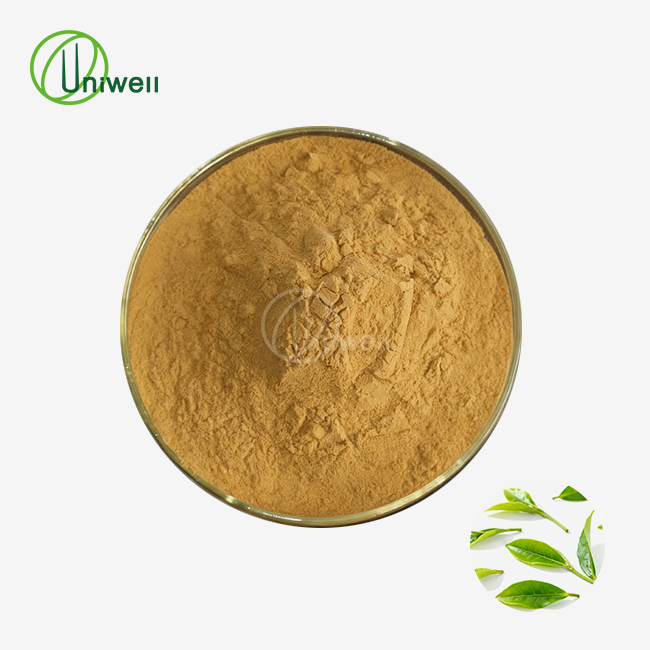
We at UNIWELL are experts at providing Organic Tea Leaf Extract Powder that is standardized to 95% EGCG. It is made in ISO22000-certified cleanrooms using continuous counter-current extraction technology. Our FDA-approved, KOSHER, and HALAL-approved extracts are tested by a third party to make sure they are pure, effective, and free of heavy metals. This way, there is no difference between batches. We ship normal orders within three business days because we keep over 100 metric tons of strategic inventory on hand and have full operations for air, sea, and land. Our OEM/ODM services are in line with USP/EP and Novel Food standards, whether you need bulk powder for filling capsules or unique recipes for private label skin care. Email our team at info@uniwellbio.com to talk about your needs and get free samples from a reputable supplier who cares about the success of your brand.
References
1. Hursel, R., Viechtbauer, W., & Westerterp-Plantenga, M. S. (2009). The effects of green tea on weight loss and weight maintenance: a meta-analysis. International Journal of Obesity, 33(9), 956-961.
2. Katiyar, S. K., Afaq, F., Perez, A., & Mukhtar, H. (2001). Green tea polyphenol (-)-epigallocatechin-3-gallate treatment of human skin inhibits ultraviolet radiation-induced oxidative stress. Carcinogenesis, 22(2), 287-294.
3. Mangels, D. R., Mohler, E. R., & Frei, B. (2021). Green tea catechins and cardiovascular health: an update. Current Opinion in Lipidology, 32(1), 31-38.
4. Reygaert, W. C. (2014). The antimicrobial possibilities of green tea. Frontiers in Microbiology, 5, 434.
5. Singh, B. N., Shankar, S., & Srivastava, R. K. (2011). Green tea catechin, epigallocatechin-3-gallate (EGCG): mechanisms, perspectives and clinical applications. Biochemical Pharmacology, 82(12), 1807-1821.
6. Weinreb, O., Mandel, S., Amit, T., & Youdim, M. B. (2004). Neurological mechanisms of green tea polyphenols in Alzheimer's and Parkinson's diseases. Journal of Nutritional Biochemistry, 15(9), 506-516.
Have a project in mind? Share your requirements — we’ll turn your ideas into reliable products.