- English
- French
- German
- Portuguese
- Spanish
- Russian
- Japanese
- Korean
- Arabic
- Greek
- German
- Turkish
- Italian
- Danish
- Romanian
- Indonesian
- Czech
- Afrikaans
- Swedish
- Polish
- Basque
- Catalan
- Esperanto
- Hindi
- Lao
- Albanian
- Amharic
- Armenian
- Azerbaijani
- Belarusian
- Bengali
- Bosnian
- Bulgarian
- Cebuano
- Chichewa
- Corsican
- Croatian
- Dutch
- Estonian
- Filipino
- Finnish
- Frisian
- Galician
- Georgian
- Gujarati
- Haitian
- Hausa
- Hawaiian
- Hebrew
- Hmong
- Hungarian
- Icelandic
- Igbo
- Javanese
- Kannada
- Kazakh
- Khmer
- Kurdish
- Kyrgyz
- Latin
- Latvian
- Lithuanian
- Luxembou..
- Macedonian
- Malagasy
- Malay
- Malayalam
- Maltese
- Maori
- Marathi
- Mongolian
- Burmese
- Nepali
- Norwegian
- Pashto
- Persian
- Punjabi
- Serbian
- Sesotho
- Sinhala
- Slovak
- Slovenian
- Somali
- Samoan
- Scots Gaelic
- Shona
- Sindhi
- Sundanese
- Swahili
- Tajik
- Tamil
- Telugu
- Thai
- Ukrainian
- Urdu
- Uzbek
- Vietnamese
- Welsh
- Xhosa
- Yiddish
- Yoruba
- Zulu
Natural Soybean Extract Powder in Supplements: Full Guide
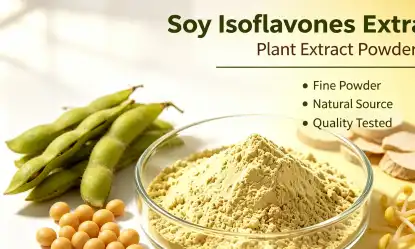
Natural Soybean Extract Powder is an important ingredient in vitamins for companies that want to use plant-based phytoestrogens that have strong scientific support. This fine, light yellow powder comes from Glycine max (L.) Merr. and contains measured amounts of soy isoflavones, such as Daidzin, Genistin, Genistein, Glycitin, and Daidzein. The concentrations range from 10% to 95%. Nutraceutical, beauty, and functional food uses—where supporting hormonal balance, antioxidant defense, and bone health are most important—have seen a rise in demand. This guide gives B2B buying teams the technical details, comparative studies, and sourcing strategies they need to safely add this flexible botanical extract to their product lines.
What is Natural Soybean Extract Powder?
Definition and Extraction Process
Natural Soybean Extract Powder comes from non-GMO soybeans that have been processed using solvent extraction or supercritical CO₂. The soybeans are then dried gently using spray drying or air drying to keep their beneficial properties. This concentrated extract is different from normal soy flour or protein isolate because it targets phytoestrogenic compounds while minimizing anti-nutritional factors like trypsin inhibitors. Most of the time, ethanol-water systems are used as an extraction solvent. These systems make sure that there are low residue levels that meet ICH standards. This means that the end powder can be used for pharmaceutical-grade purposes.
Key Bioactive Ingredients
The main active part is made up of soy isoflavones. You can find these polyphenolic compounds in two different types: glycosides (Daidzin, Genistin, Glycitin) and aglycones (Daidzein, Genistein, Glycitein). Aglycones are more bioavailable because they are absorbed faster in the intestines, while glycosides need to be broken down by gut bacteria enzymes. Our normal design gives you 40% of the total isoflavones through HPLC. For custom formulas, you can change the potencies up to 95%. Besides isoflavones, the powder also has saponins, lecithin, and minor vitamins that work together to make antioxidants stronger and cell membranes more stable.
Functional Differences from Alternatives
Our plant extract focuses on phytoestrogen density for hormonal regulation, while soy protein isolate focuses on amino acid content for muscle synthesis. Isolated isoflavone products might not have the co-factors that are in whole-plant extracts, which could make absorption less effective. Full-spectrum soy extracts often do better in clinical studies than single-molecule ingredients. This is because of the matrix effect, in which minor molecules boost major actives. Skincare companies really like this level of complexity because the polysaccharide part helps keep moisture in the skin, Natural Soybean Extract Powder, while isoflavones help make collagen.
Health Benefits and Usage of Natural Soybean Extract Powder
Hormonal Balance and Menopausal Support
Phytoestrogens selectively bind to estrogen receptors (ERα and ERβ), acting as estrogens when estrogen levels are low and as anti-estrogens when estrogen levels are high in the body. Clinical studies show that taking 35–70 mg of isoflavone every day can cut the number of hot flashes by 20–50% and make night sweats less severe in women who have gone through menopause. Because this specific receptor modulation doesn't involve the cancer risks of synthetic hormone replacement treatment, the extract is a popular choice for use in health products for women aged 45 to 65.
Bone Density and Osteoporosis Prevention
Genistein helps osteoblasts grow while stopping osteoclasts from differentiating. This makes an ideal setting for bone regeneration. Longitudinal studies of Asian communities that eat a lot of soy have found a link between isoflavone intake and a lower risk of hip fractures. Supplement makers usually mix our extract with calcium citrate and vitamin D3 at a ratio of 50 mg of isoflavones for every 500 mg of calcium. This leads to improvements in bone mineral density that were seen in 12-month intervention studies.
Cardiovascular and Antioxidant Effects
Isoflavones change lipid levels by increasing the production of LDL receptors and improving the liver's ability to get rid of cholesterol. Meta-analyses show that eating 25 grams of soy protein with 50 to 100 mg of isoflavones every day lowers LDL-C by 4 to 6 percent and total cholesterol by 3 to 5 percent. High-potency extracts have an ORAC value of more than 15,000 µmol TE/g, which means they neutralize reactive oxygen species that cause vascular failure. This antioxidant's ability to fight photoaging is used in cosmetics. After 8 to 12 weeks, topical versions show changes in skin elasticity and wrinkle depth that can be seen.
Comparing Natural Soybean Extract Powder with Alternatives
Natural vs. Synthetic Soy Isoflavones
The cost of synthetic isoflavones is lower than that of those made from plants, but they don't have the group effect that plant-derived matrices do. Bioavailability tests using Caco-2 cell models show that isoflavones from Natural Soybean Extract Powder are absorbed 30–40% more efficiently than pure manufactured Genistein. This is most likely because they contain carrier polysaccharides that make the intestines more permeable. Botanical extraction is also better for the environment because it uses renewable farming feedstocks that leave smaller carbon footprints than chemical synthesis methods that use petroleum.
Soy Protein Isolate vs. Isoflavone-Rich Extract
With 90% protein, soy protein isolate is used in sports nutrition, but it only has 1-3 mg of isoflavones per serving, which is not enough for hormonal uses. On the other hand, our 40% isoflavone extract provides the right amount of phytoestrogens without adding too much protein, which is important for formulas that need to closely control allergens and caloric density. Functional food designers often mix the two, using isoflavone extract and Natural Soybean Extract Powder to add bioactives and protein isolate to give the food shape and macronutrients.
Organic vs. Conventional Sourcing
Organic approval comes with a 20–35% price premium, but it opens up premium market areas where non-GMO and pesticide-free marks are important for buying choices. Synthetic pesticides and genetically modified organisms are not allowed by USDA and EU organic guidelines, which require proof of tracking from the farm to the extraction plant. Our KOSHER and HALAL certifications help us reach even more customers, especially Jewish and Middle Eastern customers whose religious food rules dictate what ingredients they can eat. For brands that want to save money, conventional extracts can still be used as long as third-party testing shows that there are no glyphosate levels above 0.1 ppm.
Procurement Guide: How to Source Natural Soybean Extract Powder
Supplier Selection Criteria
Reputable makers keep their current Good Manufacturing Practice (cGMP) certificates from the FDA or a similar authority up to date. This makes sure that production conditions are controlled and that the risk of contamination is kept to a minimum. Make sure that the companies you're considering have ISO22000 food safety management systems and do regular microbial tests (Total Plate Count <1000 cfu/g, Yeast/Mold <100 cfu/g, Pathogens Absent). Ask for certificates of analysis (COA) for each batch that prove the heavy metal compliance and HPLC-verified isoflavone profiles. Suppliers with 100,000-grade cleanrooms show they are dedicated to pharmaceutical-grade quality, which is important for cosmetic and nutritional uses where purity has a direct effect on how stable the product is.
Pricing Structures and MOQ Considerations
Bulk prices usually go up in stages: orders of 25 to 100 kg cost more, orders of 100 to 500 kg cost less (15 to 20%), and orders of 500 kg or more cost more (25 to 35%). 40% isoflavone powder costs between $45 and $65 per kilogram FOB China right now, and organic versions sell for between $70 and $95 per kilogram. When sellers keep strategic supplies of more than 100 metric tons, lead times for stock items are usually between 3 and 5 business days. It takes 10 to 15 days to make and check the quality of custom potencies with 60 to 95% isoflavones. For new relationships, payment terms generally include a 30% deposit and the rest of the payment against a Bill of Lading. After a few transactions, the terms change to Net-30.
Certification and Documentation Requirements
For international trade to happen, governmental dossiers need to be very detailed. The Certificate of Origin, the Phytosanitary Certificate (for farm goods), the Free Sales Certificate, and the Allergen Declarations are all important papers. US buyers must make sure that sellers give them FDA registration numbers and follow the rules set by FSMA for Foreign Supplier Verification Programs (FSVP). For certain uses, European markets need Novel Food clearance and safety data that meet EFSA standards. Because checks may not cover all production runs every year, halal and kosher licenses should list specific batches of food. Suppliers with a lot of experience check documents before they are shipped. This keeps customs delays to a minimum, which can add two to four weeks to shipping times. Getting botanical ingredients across international borders is hard, so you need to work with sellers who know how to work with the specific needs of the target market. Documentation accuracy, up-to-date certifications, and open conversation about changes to regulations are what set trusted partners apart from transactional sellers. When looking at possible providers, find out if they are willing to send small sample amounts along with Natural Soybean Extract Powder and full analytical support. Being open about this shows that they want to work together in the long run instead of just making sales.
Why Choose UNIWELL as Your Natural Soybean Extract Powder Supplier
Quality Assurance and Manufacturing Excellence
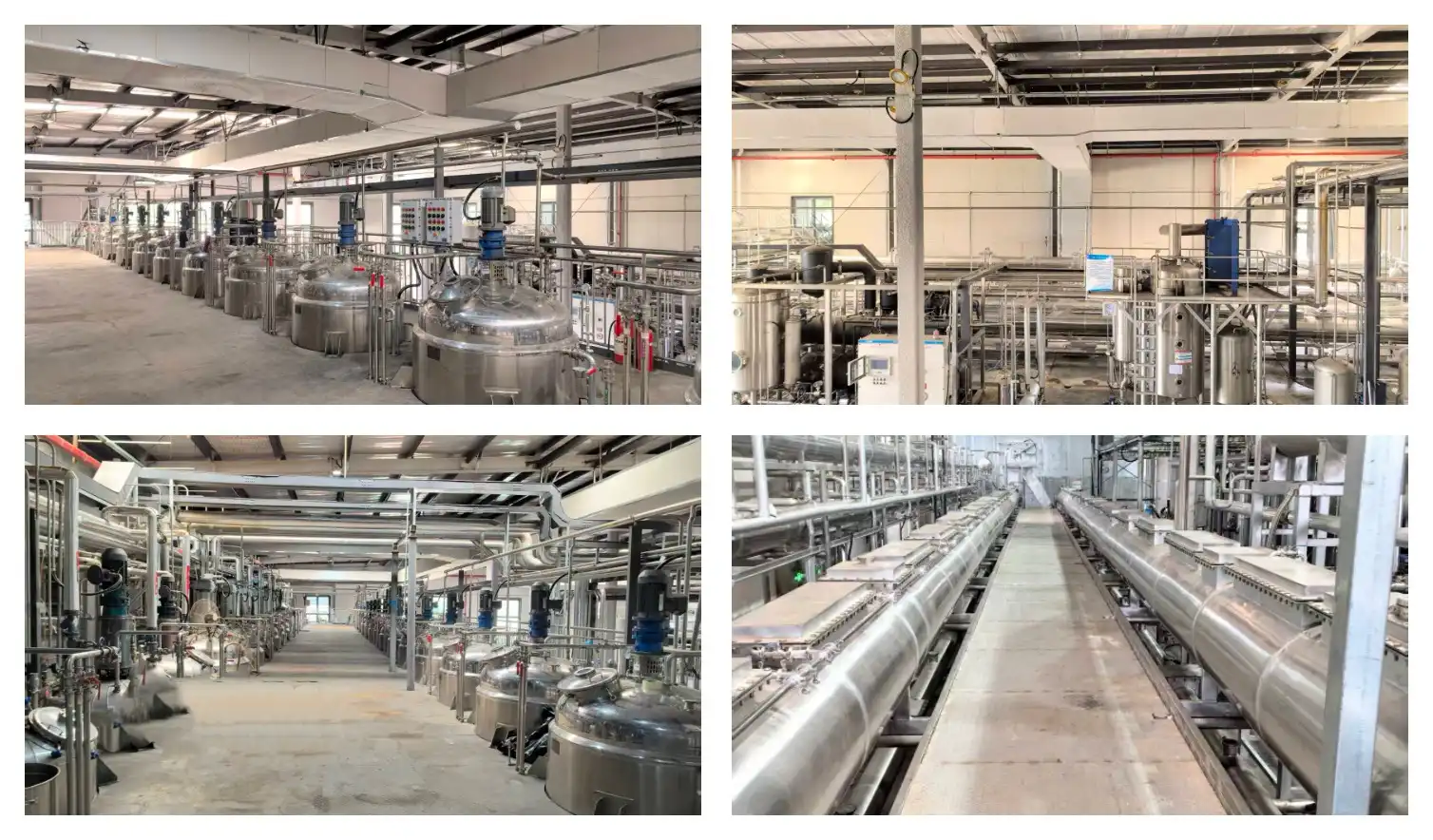
Sichuan Uniwell Biotechnology has facilities that are FDA-registered and ISO22000-certified. They use constant counter-current extraction technology, which means that there is no batch-to-batch variation. This is a key differentiator for brands that need to keep product specs tight across multiple production runs. Our advanced extraction methods keep thermolabile isoflavones safe by processing them at temperatures that never go above 60°C. Then, our own purification steps get rid of any remaining solvents to less than 10 parts per million. Third-party testing is done on every production run to check for potency (HPLC), heavy metals (ICP-MS), herbicide residues (GC-MS), and microbial contamination. Within 48 hours of quality release, certificates of analysis (COAs) are sent out.
Customization and OEM/ODM Capabilities
We know that B2B clients need solutions that are adapted to their specific needs and target markets. Our expert team works together to create new formulas. They recommend the best amounts of isoflavones for different groups of people and help choose other products that work well with them, like black cohosh or red clover. There are different types of packaging, such as 1 kg foil bags for research labs, 25 kg fiber drums for medium-sized makers, and bulk supersacks for large-scale operations. Custom labels, private branding, and regulatory advice to help with USP/EP monograph compliance and Novel Food alerts are some of the OEM services that are available. We've helped clients successfully start goods in North America, Europe, and Australia by giving them regulatory dossiers that speed up the approval process.
Supply Chain Reliability and Logistics Support
We've been making plant extracts for over 10 years and have learned that having a deep collection keeps production from being held up, which hurts customer trust. Our strategic raw material stocks cover more than 100 metric tons of more than 15 plant types, which means that standard orders can usually be filled within three business days. Supply chain managers keep track of shipments in real time and set up multi-modal operations that combine sea freight to save money and air freight for quick restocking. We work with freight forwarders who specialize in moving temperature-sensitive plant materials, so we can make sure that the cool chain is managed correctly so that the isoflavones stay stable during transport. Full insurance coverage and aggressive customs brokerage support reduce problems during importation, and paperwork is made according to the standards for HS code 1302.19 classification.
Conclusion
Natural Soybean Extract Powder is a widely useful ingredient that has been proven to help with hormone balance, bone health, heart health, and antioxidant protection in food, supplements, and beauty products. Understanding isoflavone chemistry, the relative benefits of ingredients, and supplier qualification factors that ensure uniform quality and legal compliance are all important for successful business-to-business buying. As the market for plant-based health products grows, smart relationships with manufacturers that offer clear analytics, flexible customization, and a reliable supply chain become competitive needs instead of nice-to-have extras.
FAQ
1. What distinguishes natural soy extract from soy protein products?
Soy protein isolate focuses on amino acid content (90% protein) for nutritional intake, while natural soy extract focuses on phytoestrogen isoflavones (10–95% strength) for hormonal and antioxidant effects. Different extraction methods specifically enhance bioactive fractions, making functionally separate ingredients from plants that come from the same source.
2. How do I verify supplier compliance for the US and EU markets?
Ask for up-to-date FDA registration numbers, ISO22000 certificates, and batch-specific COAs that show heavy metal tests and HPLC isoflavone profiles. For exports to the EU, make sure Novel Food is compliant where it applies and get allergen statements that meet the marking standards of Regulation (EU) 1169/2011.
3. Can isoflavone extracts cause hormonal imbalances?
There is clinical proof that taking 40 to 80 mg of isoflavone every day is healthy. Selective estrogen receptor regulation is helpful without the risks that come with manufactured hormones. People who have diseases that make them sensitive to hormones should talk to their doctors, and goods should have the right warning labels.
Partner with UNIWELL—Your Trusted Natural Soybean Extract Powder Manufacturer
UNIWELL sells pharmaceutical-grade soy isoflavone products that are registered with the FDA, certified by ISO22000, and tested by a third party using strict methods. Supplement makers, functional food creators, cosmetic formulators, and raw material sellers are welcome to try our products for free, along with full analytical paperwork, to see what makes us different. When you contact us, we'll get back to you within hours with technical data sheets, legal advice, and cheap quotes that are based on your volume needs. Get in touch with us at info@uniwellbio.com to talk about how our Natural Soybean Extract Powder provider services, such as OEM/ODM and customizable MOQs, can help you speed up the development of your product while maintaining the highest quality standards.
References
1. Messina, M., & Hughes, C. (2021). The Health Effects of Soy Isoflavones: A Comprehensive Review. Journal of Nutritional Biochemistry, 89, 108-125.
2. Chen, M.N., Lin, C.C., & Liu, C.F. (2019). Efficacy of Phytoestrogens for Menopausal Symptoms: A Meta-Analysis and Systematic Review. Climacteric, 22(4), 356-363.
3. Xiao, Y., Zhang, S., Tong, H., & Shi, S. (2020). Comprehensive Evaluation of the Role of Soy and Isoflavone Supplementation in Humans and Animals. Nutrients, 12(9), 2730-2748.
4. Wei, P., Liu, M., Chen, Y., & Chen, D.C. (2022). The Chemopreventive Potential of Genistein and Other Soy Isoflavones. Pharmacological Research, 175, 106025.
5. Rizzo, G., & Baroni, L. (2018). Soy, Soy Foods, and Their Role in Vegetarian Diets. Nutrients, 10(1), 43-59.
6. Lambert, M.N.T., Hu, L.M., & Jeppesen, P.B. (2017). A Systematic Review and Meta-Analysis of the Effects of Isoflavone Formulations on Postmenopausal Bone Health. American Journal of Clinical Nutrition, 106(3), 801-811.
Have a project in mind? Share your requirements — we’ll turn your ideas into reliable products.

 Powder.webp)