- English
- French
- German
- Portuguese
- Spanish
- Russian
- Japanese
- Korean
- Arabic
- Greek
- German
- Turkish
- Italian
- Danish
- Romanian
- Indonesian
- Czech
- Afrikaans
- Swedish
- Polish
- Basque
- Catalan
- Esperanto
- Hindi
- Lao
- Albanian
- Amharic
- Armenian
- Azerbaijani
- Belarusian
- Bengali
- Bosnian
- Bulgarian
- Cebuano
- Chichewa
- Corsican
- Croatian
- Dutch
- Estonian
- Filipino
- Finnish
- Frisian
- Galician
- Georgian
- Gujarati
- Haitian
- Hausa
- Hawaiian
- Hebrew
- Hmong
- Hungarian
- Icelandic
- Igbo
- Javanese
- Kannada
- Kazakh
- Khmer
- Kurdish
- Kyrgyz
- Latin
- Latvian
- Lithuanian
- Luxembou..
- Macedonian
- Malagasy
- Malay
- Malayalam
- Maltese
- Maori
- Marathi
- Mongolian
- Burmese
- Nepali
- Norwegian
- Pashto
- Persian
- Punjabi
- Serbian
- Sesotho
- Sinhala
- Slovak
- Slovenian
- Somali
- Samoan
- Scots Gaelic
- Shona
- Sindhi
- Sundanese
- Swahili
- Tajik
- Tamil
- Telugu
- Thai
- Ukrainian
- Urdu
- Uzbek
- Vietnamese
- Welsh
- Xhosa
- Yiddish
- Yoruba
- Zulu
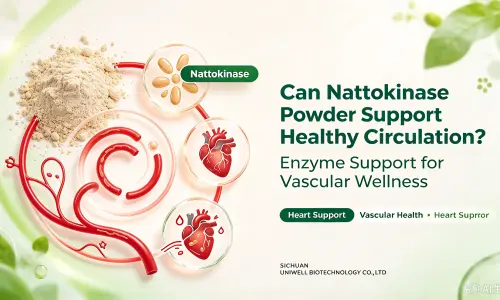
Can Nattokinase Powder Support Healthy Circulation?
Yes — nattokinase powder can support healthy circulation. Derived from Bacillus subtilis natto fermentation, this serine protease enzyme directly degrades fibrin, the protein that forms blood clots. Clinical research published in Hypertension Research (2008) showed measurable reductions in systolic and diastolic blood pressure among subjects supplementing with nattokinase. For B2B formulators building cardiovascular SKUs, the key differentiator is sourcing a standardized, high-activity grade — specifically 20,000 FU/g — tested by the Fibrin Plate Method consistent with Japan Natto Association protocols.
Understanding Nattokinase Powder and Its Role in Circulation
Nattokinase powder is an enzyme that breaks down fibrin. It comes from natto, which is fermented soybeans made with Bacillus subtilis natto. It is a serine enzyme from the subtilisin family, and its size is about 27.7 kDa. Cross-linked fibrin is what makes blood clots strong. Its main job is to break it down and raise the levels of endogenous tissue plasminogen activator (t-PA).
Fibrinolytic Activity and Blood Flow
Nattokinase powder, on the other hand, is swallowed and absorbed by the body. Researchers have shown that it lowers the viscosity of blood and keeps platelets from sticking together in strange ways, which have a direct effect on the flow of blood through capillaries. As a way to measure action, fibrin units (FU) per gram are used. A grade of 20,000 FU/g is very strong, generally accepted, and good for high-end cardiovascular formulas.
Blood Pressure Regulation Evidence
In a study with 86 people that was random, double-blind, and looked at hypertension, taking 2,000 FU every day for eight weeks dropped both systolic and diastolic blood pressure in a way that was statistically significant. For buying teams and formulators, this much clinical proof gives them the science background they need to make positioning for heart health.
Cognitive Health Connection
Having good blood flow has a direct effect on how much oxygen and food get to the brain. More and more, ginkgo biloba or omega-3 fatty acids are being combined with nattokinase powder in brain support goods. This is because people over 50 need to keep their brains healthy to remember things and think straight.
Comparing Nattokinase Powder with Alternative Supplements for Blood Health
Teams often compare nattokinase powder to serrapeptase, lumbrokinase, and other popular anticoagulant nutrients when they are shopping for circulation ingredients. Because they all work differently and pose different risks, choosing the right active ingredient depends on the design goals, the people you want to reach, and the law.
Nattokinase vs. Serrapeptase
Serrapeptase is an enzyme that helps break down food. It comes from bacteria that live in silkworm guts. It may lower swelling, but nattokinase powder does a better job of breaking down fibrin. It also doesn't stay stable as well when taken by mouth. Supplement companies in Japan and Korea still pick nattokinase over other ingredients when their heart-healthy products need to have proven FU-based strength.
Nattokinase Powder vs. Lumbrokinase
It comes from earthworms and has different kinds of proteases in it. It's biologically effective, but it's not made up of a single enzyme like nattokinase powder is. For clean-label products and markets with strict regulations about animal-origin products, nattokinase powder made from fermented soy makes the ingredient list easier to read.
Pure Powder vs. Encapsulated Blends
Pure nattokinase powder at 20,000 FU/g gives formulators the most ways to dose it. When fillers are added to pre-blended or encapsulated forms, the amount of active ingredient in each pill goes down. When buying professionals buy in bulk for OEM production, they always choose pure powder that has been verified by a third-party COA. This saves them money and lets them keep control of the recipe.
Safe Usage Guidelines and Potential Side Effects
Regulatory teams and people in charge of product development need to know how safe nattokinase powder is. People have been tested on this ingredient and found it to be safe, but it is still important to know about possible side effects and the right amount to use when making a product.
Recommended Dosing Range
Clinical studies that have been made public have used a daily amount of between 2,000 and 10,800 FU. Most commercial heart health products say that taking between 2,000 and 4,000 FU every day is a good idea because it is safe and effective. At 20,000 FU/g activity, a biologically useful amount is only 100–200 mg of powder per capsule. When companies use high-activity grades, they can save money.
Vitamin K2 Interaction Considerations
Vitamin K2 (Menaquinone-7) is found naturally in natto. This vitamin can make warfarin less effective. Vitamin K2 levels in nattokinase powder should usually be less than 0.1 ppm if it is to be used as a pharmaceutical-grade supplement. The chromatographic process can be used to do this. This is true for UNIWELL's nattokinase powder, so it can be added safely with other heart-healthy items.
Drug Interaction Advisories
The effects of nattokinase powder may be stronger than those of blood thinners like warfarin and aspirin. Labels on drugs in the US must follow FDA DSHEA rules, which say they can't make clear health claims about blood thinners. They should work together with procurement teams to make sure that claims for circulatory support are made in a fair and correct way.
Sourcing and Procurement Strategies for Nattokinase Powder
Before you buy nattokinase powder from a supplier, you should check where the fermentation took place, how real the strain is, how open the testing is, and how much they can give you in the long term. All of these things are important for businesses that make heart goods that last a long time.
The following basic things should be checked by buyers of nattokinase powder before they choose a seller:
- Strain authentication: Confirm Bacillus subtilis natto strain consistency with Japan Natto Association standards. This validates fermentation authenticity and activity measurement accuracy.
- Third-party activity verification: Request batch-level COA confirming 20,000 FU/g via the Fibrin Plate Method. Avoid suppliers using chromogenic substrate methods alone, as these may measure total protease activity rather than fibrin-specific activity.
- Heavy metal and microbial compliance: Verify Lead ≤ 2.0 mg/kg, Arsenic ≤ 1.0 mg/kg, and pathogen-free status to satisfy Japan Consumer Affairs Agency and Korean KFDA import standards.
- Packaging and logistics: 25 kg food-grade drums with double polyethylene inner liners support bulk handling. Confirm sea and air freight options, plus documentation support for customs clearance.
If these things are met, procurement teams can move on from the original sample review to yearly volume contracts without any problems. The approval risk goes down at each step.
Case Studies and Market Trends in Cardiovascular Health Supplements
The world market for nattokinase has slowly grown as more people want enzyme-based treatments that don't involve drugs and as the number of people with heart disease has gone up. Grand View Research says that the world market for nattokinase will grow at a rate of more than 7% per year until 2030. China, South Korea, and the US will all buy more, which will lead to this growth.
OEM Success in Japanese and Korean Markets
Top supplement brands in Japan and South Korea have made heart-healthy SKUs with nattokinase powder that has around 20,000 FU/g. Some of these SKUs are vitamin E, ginkgo biloba, and fish oil. All of these help the circulation system. However, these brands will now accept nattokinase from Taiwan as long as the sources can show full fermentation tracking and testing paperwork that follows the rules set by the Japan Natto Association.
US Market Expansion for 50+ Demographics
Nattokinase powder has been added to "blood circulation" products in the United States that are marketed to people 50 and older. These products also contain CoQ10, magnesium, and omega-3s. When third-party NSF or USP testing labels are used, these SKUs with more than one ingredient sell well on Amazon and iHerb.
Regulatory Tailwinds and Label Intelligence
A system called Kinōsei Hyōji Shokuhin (Functional Foods) in Japan and the KFDA health function food category in Korea make it easy for products that use nattokinase to get approved. It can take a lot longer for brands to file regulatory papers before they get uniform, fully recorded amounts of ingredients from verified sources.
Conclusion
Scientific evidence shows that nattokinase powder helps keep blood flowing well by breaking down fibrinogen, lowering blood pressure, and encouraging the body to make its own t-PA. One of the most important things for B2B buying teams is that the Bacillus subtilis natto strain is valid, that third-party heavy metal and microbial compliance is met, and that full batch tracking is possible. When made with Taiwanese rice that meets the Japan Natto Association's testing standards, it gives the Japanese, Korean, and US markets a safe and inexpensive choice.
FAQ
1. Is long-term use of nattokinase powder considered safe?
Human clinical studies up to 26 weeks have reported no serious adverse events at doses between 2,000 and 10,800 FU daily. Long-term safety data beyond six months remains limited, but the ingredient's food-origin status and oral bioavailability profile support its favorable safety record relative to synthetic thrombolytics.
2. How does nattokinase powder differ from pharmaceutical blood thinners?
Pharmaceutical anticoagulants such as warfarin target clotting factor synthesis. Nattokinase powder acts directly on existing fibrin clots and supports endogenous plasmin activity. It does not require INR monitoring and carries a lower bleeding risk profile at standard supplement doses, though interactions with anticoagulant medications still require clinical advisories on product labels.
3. What should B2B buyers verify when selecting a nattokinase powder supplier?
Buyers should confirm: (1) FU/g activity via Fibrin Plate Method COA, (2) Bacillus subtilis natto strain documentation, (3) heavy metal results within Japan and EU limits, (4) Vitamin K2 content below 0.1 ppm if co-formulating with cardiac populations, and (5) batch traceability records from fermentation through final packaging.
4. Does fermentation origin affect nattokinase powder quality?
Yes. Fermentation conditions, strain purity, and post-processing protocols directly affect enzyme activity stability and contaminant profiles. Taiwanese facilities with decades of natto fermentation experience, operating under strict food-grade quality control aligned with Japan Natto Association standards, consistently produce high-quality, stable material.
Partner with UNIWELL for Verified Nattokinase Powder Supply
They make the best nattokinase powder, which has 20,000 FU/g and is FDA, ISO 22000, Halal, and Kosher approved. This is our 10th year making nattokinase powder. We are a reliable business that ships goods all over the world. From our strategic inventory, we can ship most orders within three business days. Every batch comes with a full COA, test reports from a third party, and help for OEM paperwork. Send an email to info@uniwellbio.com to get samples and prices from our ingredient team.
References
1. Hsia, C. H., et al. "Nattokinase decreases plasma levels of fibrinogen, factor VII, and factor VIII in human subjects." Nutrition Research, 2009.
2. Kim, J. Y., et al. "Effects of nattokinase on blood pressure: A randomized, controlled trial." Hypertension Research, 2008.
3. Sumi, H., et al. "A novel fibrinolytic enzyme (nattokinase) in the vegetable cheese Natto." Experientia, 1987.
4. Peng, Y., et al. "Nattokinase: An oral antithrombotic agent for the prevention of cardiovascular disease." International Journal of Molecular Sciences, 2017.
5. Kurosawa, Y., et al. "A single-dose of oral nattokinase potentiates thrombolysis and anti-coagulation profiles." Scientific Reports, 2015.
6. Grand View Research. "Nattokinase Market Size, Share & Trends Analysis Report." Grand View Research Industry Report, 2023.
Have a project in mind? Share your requirements — we’ll turn your ideas into reliable products.