- English
- French
- German
- Portuguese
- Spanish
- Russian
- Japanese
- Korean
- Arabic
- Greek
- German
- Turkish
- Italian
- Danish
- Romanian
- Indonesian
- Czech
- Afrikaans
- Swedish
- Polish
- Basque
- Catalan
- Esperanto
- Hindi
- Lao
- Albanian
- Amharic
- Armenian
- Azerbaijani
- Belarusian
- Bengali
- Bosnian
- Bulgarian
- Cebuano
- Chichewa
- Corsican
- Croatian
- Dutch
- Estonian
- Filipino
- Finnish
- Frisian
- Galician
- Georgian
- Gujarati
- Haitian
- Hausa
- Hawaiian
- Hebrew
- Hmong
- Hungarian
- Icelandic
- Igbo
- Javanese
- Kannada
- Kazakh
- Khmer
- Kurdish
- Kyrgyz
- Latin
- Latvian
- Lithuanian
- Luxembou..
- Macedonian
- Malagasy
- Malay
- Malayalam
- Maltese
- Maori
- Marathi
- Mongolian
- Burmese
- Nepali
- Norwegian
- Pashto
- Persian
- Punjabi
- Serbian
- Sesotho
- Sinhala
- Slovak
- Slovenian
- Somali
- Samoan
- Scots Gaelic
- Shona
- Sindhi
- Sundanese
- Swahili
- Tajik
- Tamil
- Telugu
- Thai
- Ukrainian
- Urdu
- Uzbek
- Vietnamese
- Welsh
- Xhosa
- Yiddish
- Yoruba
- Zulu
What is Organic Ginkgo Leaf Good For?
Organic ginkgo leaf serves as a premium botanical ingredient valued across multiple wellness sectors, delivering cognitive enhancement, antioxidant neuroprotection, and cardiovascular support. Sourced from Ginkgo biloba L., this ancient botanical ingredient meets rigorous organic certification standards, making it ideal for nutraceutical manufacturers, supplement formulators, and functional food developers seeking clean-label, bioactive materials. Organic ginkgo leaf powder preserves the full spectrum of naturally occurring flavonoids, terpene lactones, and polyphenols without synthetic additives or concentration processes, ensuring product authenticity and compliance with international regulatory frameworks.
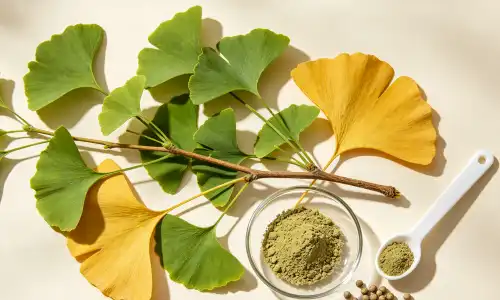
Understanding Organic Ginkgo Leaf: Benefits and Uses
Health Benefits for Commercial Formulations
Organic ginkgo leaf has chemicals that are good for you and help the brain work better by sending more blood to it. You can remember things, focus, and think more clearly this way. You can use these benefits to get your supplements in front of older people, women going through menopause whose brains are changing, and workers who want to make their brains work better. Free radicals are stopped by polyphenols, which are antioxidants. This keeps cells from getting hurt and helps protect nerves in general. Ginkgo is good for your heart because it widens blood vessels and makes arteries work better. Because of this, it can be used in items that are good for your heart.
Available Formats and Applications
Organic ginkgo leaf products that can be used in a lot of different categories can be made with different forms. Powder made from whole leaves (40–60 mesh) keeps their natural shape and doesn't break up into smaller pieces. You can use it to make plant tea blends, healthy drink mixes, and your own supplement recipes. Flavonoids and terpene lactones are found in large amounts in standardized extracts. These can be used to make pills and tablets that need to be dosed correctly. For clear drinks, grades that dissolve in water work well. Grades made for makeup can help skin care items by being antioxidants. Because each style works better with a certain type of recipe, brands can make organic products that appeal to their target market.
Dosage Guidelines and Safety Considerations
Most over-the-counter formulas have 120 to 240 mg of standardized extract or whole leaf powder in them every day. When you know about possible side effects, you can be sure that they can be used properly in a lot of different groups. At certain amounts, headaches or slight stomach pain happen very rarely. Blood thinners may not work well with ginkgo, so it needs to be clearly marked so people know what to do. The ginkgolic acid level must stay below 5 ppm, and ideally less than 1 ppm, so the product is safe and no one gets allergic. Very strict testing methods are used to make sure these factors are met, which helps with following the rules and keeping customers safe in all foreign markets.
Organic vs Non-Organic Ginkgo Leaf: What B2B Buyers Should Know
Quality and Efficacy Differences
Researchers have found that organic ginkgo materials often have higher amounts of antioxidants than their regularly grown peers. The reason for this difference is that plants can handle stress better when they are growing naturally, without using man-made materials. When the profiles of phytochemicals are better, there is more bioactivity per unit weight. This can help with formulation, even if the organic materials cost more. Independent lab tests, like HPLC fingerprinting and antioxidant assays, confirm these differences in quality. This gives buyers unbiased data they can use to make choices.
Cost Structures and Market Positioning
Organic ginkgo leaf costs about 15–30% more than regular products because it costs more to grow, get a license, and make sure the quality is better. In the long run, though, this extra cost pays off by improving relationships with suppliers, lowering legal risk, and making the business stand out more. When people are willing to pay more for certified organic goods, store margins can go up. This can help balance out cost increases that happen earlier. Customers who care about their health will be drawn to your high-end, clean-label brand. This will also help you build trust in supplement categories that are already very competitive.
Product Form Considerations
Most of the phytochemicals are natural and organic, and whole leaf powder has the most of them. It's good for brands that focus on classic plant health and benefits for the whole body. Standardized extracts give uniform potency to clinical goods that need exact amounts of active ingredients. But the ways that the oil is extracted must keep their organic approval. There are pros and cons to each form. Powders are good for tea blends and functional foods, while extracts let you make targeted supplements. When buyers know about these trade-offs, they can pick the materials that will help them reach their product development goals and meet the needs of their target market.
Sourcing Organic Ginkgo Leaf: Finding Reliable Suppliers and Brands
Certification Verification Essentials
For food to be truly organic, there must be clear records of how it is grown, processed, and who controls the supply chain. What buyers should do is ask for up-to-date organic certificates with expiration dates that are still valid and use official databases to make sure that the certification body is real. Instead of a one-time license, checks and papers for renewal happen every year to make sure that compliance is still being met. There is more peace of mind when finished goods are linked to specific farm lots. This is because clear supply chain records make it possible to look into any quality problems. Reliable companies take care of these systems on their own because they see tracking as good for business and not as a burden from the government.
Production Capacity and Supply Chain Management
By checking how much a supplier can produce, problems during scale-up that come from not having enough supplies or quality that isn't consistent can be avoided, especially for Organic ginkgo leaf. Find out how much is made every year, where the raw materials come from, and how much is kept in secure stock. Suppliers who keep more than 100 metric tons of raw materials on hand show that they can pay their bills and are committed to a steady supply. Average wait times for standard sales are three business days. This shows that things are running smoothly and customer service is quick to respond. Buyers can plan their budgets for purchases and how to store things better when they know the minimum order quantities (MOQs). They can also get better terms for bigger orders.
Practical Procurement Insights
When you're discussing prices, you should think about how much you want to spend, how good the quality needs to be, and how reliable your supply is. Contracts that last more than one year and agree on a certain amount of work usually get better prices and make sure that supplies get to the people who need them first when there are shortages. Private labeling and custom bulk sizes are two custom packaging options that can help brands that want turnkey solutions. Help with all procedures, such as choosing between air, sea, and land freight, and all export paperwork, makes it easier to do business across borders. Having experienced sellers can make it easier for buying teams to do their jobs by helping with things like customs, government paperwork, and needs that are unique to a market.
Maximizing the Benefits of Organic Ginkgo Leaf in Your Product Line
Formulation Guidance and Regulatory Compliance
It is important to pay attention to how the rules and ingredients work together in order to make a good product. For formulas that help the brain, organic ginkgo leaf goes well with herbs like bacopa, rhodiola, and ashwagandha. For formulas that help with menopause, black cohosh and red clover work well. During production, formulation scientists have to think about particle size, moisture content, and how the food needs to be processed in order to keep the organic approval. How to follow the rules varies from place to place. In the US, for example, the FDA is in charge of GRAS status and marking rules. In the EU, on the other hand, Novel Food studies and following Directive 2002/46/EC are necessary for markets.
Brand Differentiation Strategies
Being organically certified for Organic ginkgo leaf gives your marketing strong messages that connect with what people care about when it comes to health, the environment, and being a good business. Brands that stress openness in the supply chain, building long-term relationships with customers, and strict quality checks connect with picky customers in a real way. Labels and digital materials should make it clear when they talk about organic certification, third-party testing, and batch tracking. This will help build trust. It works especially well for women's health brands, since people care more about safety and trustworthiness than price when they decide what to buy.
Quality Assurance for B2B Confidence
Accredited labs test the product on a third party to make sure that the safety factors, label claims, and specs are right. Full lab results should include the amounts of herbicide residues, heavy metals (like mercury, lead, arsenic, and cadmium), microbial toxins (like E. coli, Salmonella, and total plate count), and active ingredients. You can keep track of all of your products and send them to the right authorities with the help of batch documentation like inspection records for raw materials, production logs, and final test reports. Companies that want to work with reliable suppliers like those that offer this level of quality assurance because it shows that they care about the relationship and want to lower risk.
How is Organic Ginkgo Leaf Grown and Processed?
Cultivation and Harvesting Practices
Certified organic ginkgo growing does not allow the use of synthetic products. Instead, natural fertilizers like green manure crops, composted manure, and composted manure are used. Groups of helpful insects, plant-based poisons like neem or pyrethrum, and physical hurdles are all biological ways to get rid of pests. These ways keep up with licensing rules and keep crop health and yields safe. When you pick the leaves makes a big difference in the phytochemical content. The most polyphenols and terpene lactones are found in leaves picked between late summer and early fall. It is best to harvest leaves by hand or with a machine so that the active compounds are not damaged too much.
Post-Harvest Processing and Quality Preservation
Before they are sold, organic ginkgo leaves are washed to get rid of dirt and other dangerous things that might be on them. Drying things in the air at a controlled temperature (≤50°C) keeps bacteria safe by lowering the moisture content to ≤15% and protecting bioactive chemicals that break down in heat. When you mill something slowly, you get fine powder (40–60 mesh) with a stable range of particle sizes. This lets you mix ingredients evenly in recipes. The process of sieving gets rid of flaws and bits that are too big, leaving behind a powder that can be used in food and medicine. Tough rules make sure that non-organic materials don't get mixed in during processing. This keeps the approval's purity.
Supply Chain Transparency and Traceability
Finished goods can be fully tracked back to their original fields, harvest times, and groups of processors. Organic certificates, field records, processing logs, and reports on quality testing are all used as proof at every step of the supply chain. Along with regular papers, blockchain-based tracking systems are becoming more and more useful because they keep records that can't be changed and are open to sellers and government officials. Customers are more likely to believe that the goods they buy are real when businesses are more open. This helps them follow the rules and fix quality problems quickly. If a supplier can show that they can do good traceability, they become a reliable partner for long-term buying relationships.
Conclusion
Businesses that buy organic ginkgo leaf and use it to make high-end supplements, recipes for women's health, and other useful health products get a lot for their money. Organic farming that is certified guarantees that the food is more pure, has more bioactivity, and follows all international rules. Risks are lower and brands stand out when they buy from qualified sources that offer full paperwork, thorough testing, and clear tracking. People want botanicals with clean labels, and adding organic ginkgo leaf to product lines meets that need. This leads to better market success and premium placement. What will help your business the most is to pay close attention to how this plant-based ingredient works with other ingredients, how much to use, and the rules for quality control.
FAQ
1. What dosage of organic ginkgo leaf is recommended for cognitive health supplements?
Every day, most over-the-counter brain boosters have between 120 and 240 mg of standardized ginkgo extract (24% flavone glycosides and 6% terpene lactones) or 500 to 1000 mg of whole leaf powder. In tests with real people, these amounts have been shown to work and are safe. Formulators should think about the target audience, ingredients that work well together, and how the drug will be transported when they come up with the final amount.
2. Are there contraindications or side effects to consider?
Organic ginkgo leaf is usually safe to take in the amounts that are recommended. It's not common for mild side effects like stomach pain, headaches, or feeling dizzy to happen. Blood thinners may work better with ginkgo, so it needs to be marked with warnings for people who take them. To stop allergy reactions, make sure the ginkgolic acid amount stays below 5 ppm, or even better, less than 1 ppm. If you are pregnant or nursing, you should talk to your doctor before using.
3. How can buyers verify authentic organic certification?
Ask for up-to-date organic certificates from well-known certification groups, such as the USDA, the EU, or other similar groups. The certificates should say when they are valid and what they cover. Use public sources to find out if the certification group is real. Check all the papers that are involved in the supply chain. These could be farm records, processing logs, or papers for changing control. You can also be sure that organic products are real by having third-party lab tests that check for pesticide residue compliance.
Partner with UNIWELL for Premium Organic Ginkgo Leaf Supply
UNIWELL has been making plant extracts for more than 10 years and can offer certified organic ginkgo leaf powder that meets the strictest international standards. With strict third-party testing, USDA and EU Organic certifications, and full batch tracking, our 100% pure organic ginkgo leaf powder (40-60 mesh) keeps the full phytochemical profile. Because we keep more than 100 metric tons of stock on hand, we can ship most orders in three days. Our dedicated supply chain team handles everything, including making sure all the paperwork is in order so that customs approval goes smoothly. We offer competitive pricing that stays the same from batch to batch, full technical support during the whole product development process, and flexible ODM/OEM customization that fits the needs of the target market. You can email our team at info@uniwellbio.com to get samples, proof of analysis, or to talk about getting a lot of leaves for your next project.
References
1. Chen, Y., Wang, H., & Zhang, L. (2021). Phytochemical profiles and antioxidant activities of organic versus conventional Ginkgo biloba leaf materials. Journal of Agricultural and Food Chemistry, 69(14), 4235-4246.
2. European Medicines Agency. (2020). Assessment report on Ginkgo biloba L., folium: Quality and safety evaluation for herbal medicinal products. Committee on Herbal Medicinal Products, EMA/HMPC/321095/2020.
3. McKenna, D.J., Jones, K., & Hughes, K. (2019). Botanical medicines: The desk reference for major herbal supplements (3rd ed.). New York: Haworth Herbal Press.
4. United States Pharmacopeial Convention. (2022). Ginkgo biloba extract monograph. USP-NF 2022, General Chapter <563>.
5. World Health Organization. (2021). WHO monographs on selected medicinal plants: Volume 5. Geneva: WHO Press.
6. Zhang, S., Wu, Q., & Liu, M. (2020). Organic certification and phytochemical consistency in traditional Chinese medicinal plants: A comprehensive review. Phytotherapy Research, 34(8), 1876-1891.
Have a project in mind? Share your requirements — we’ll turn your ideas into reliable products.