- English
- French
- German
- Portuguese
- Spanish
- Russian
- Japanese
- Korean
- Arabic
- Greek
- German
- Turkish
- Italian
- Danish
- Romanian
- Indonesian
- Czech
- Afrikaans
- Swedish
- Polish
- Basque
- Catalan
- Esperanto
- Hindi
- Lao
- Albanian
- Amharic
- Armenian
- Azerbaijani
- Belarusian
- Bengali
- Bosnian
- Bulgarian
- Cebuano
- Chichewa
- Corsican
- Croatian
- Dutch
- Estonian
- Filipino
- Finnish
- Frisian
- Galician
- Georgian
- Gujarati
- Haitian
- Hausa
- Hawaiian
- Hebrew
- Hmong
- Hungarian
- Icelandic
- Igbo
- Javanese
- Kannada
- Kazakh
- Khmer
- Kurdish
- Kyrgyz
- Latin
- Latvian
- Lithuanian
- Luxembou..
- Macedonian
- Malagasy
- Malay
- Malayalam
- Maltese
- Maori
- Marathi
- Mongolian
- Burmese
- Nepali
- Norwegian
- Pashto
- Persian
- Punjabi
- Serbian
- Sesotho
- Sinhala
- Slovak
- Slovenian
- Somali
- Samoan
- Scots Gaelic
- Shona
- Sindhi
- Sundanese
- Swahili
- Tajik
- Tamil
- Telugu
- Thai
- Ukrainian
- Urdu
- Uzbek
- Vietnamese
- Welsh
- Xhosa
- Yiddish
- Yoruba
- Zulu
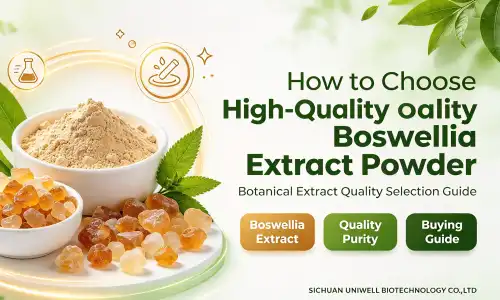
How to Choose High-Quality Boswellia Extract Powder
Choosing the right boswellia extract powder is one of the most consequential decisions a joint health brand founder can make. With dozens of suppliers offering varying grades, testing methods, and certifications, the difference between a premium product and a substandard one can determine whether your formulation delivers clinical results — or falls short of label claims. This guide walks through every factor that matters: standardization, certifications, stability, sourcing, and supplier evaluation, so your procurement process is grounded in science and protected by documentation.
Understanding Boswellia Extract Powder and Its Market Value
Botanical Origin and Bioactive Composition
The oleo-gum resin of Boswellia trees, primarily Boswellia serrata and Boswellia carterii, is used to make Boswellia extract powder. Boswellic acids are pentacyclic triterpenes that are separated from the resin after it is collected, cleaned, and concentrated. The most drug-like of these is AKBA (3-O-acetyl-11-keto-beta-boswellic acid), which blocks the 5-lipoxygenase (5-LOX) enzyme and stops the production of leukotrienes and long-term inflammation.
Multi-Sector Applications
Standardized frankincense extract is utilized in several sectors. It is the base of joint health matrix formulae in nutraceuticals together with curcumin, UC-II collagen and hyaluronic acid. It helps with sports recovery by modulating IL-6 and TNF-α pathways that induce inflammation after exercise. It is used in cosmetic businesses' serums to treat inflammatory skin disorders. Each usage requires a varied amount of specification (65% to 90% boswellic acids). That has a direct impact on the selection of what to purchase.
Regulatory and Safety Context
The good news is that boswellia extract is quite safe . Clinical studies using daily dosages of 100 to 500 mg have shown minimal adverse effects, mostly minor stomach upset at higher doses. The regulations demand that US brands verify the FDA NDI status of new substances, and Novel Food legislation makes distribution into Europe harder. Brands that operate in many markets need to grasp these standards before picking a partner.
Core Criteria to Evaluate High-Quality Boswellia Extract Powder
Standardization Method: HPLC vs. Titration
The method used to check the amount of boswellic acid has a direct effect on how reliable the specification is. Titration is a less exact and easy to change way to measure total organic acids. High-Performance Liquid Chromatography (HPLC) accurately separates different types of boswellic acid, such as AKBA. A definition that has been checked by HPLC, whether it's 65%, 85%, or 90% boswellic acids, is the only one that brands should accept when making carefully positioned SKUs. Prior to placing a trial order, you should always ask for the CoA and confirm the testing method.
Certifications and Third-Party Validation
A supplier's list of certifications shows exactly how good its quality system is. FDA registration, ISO 22000, KOSHER, and HALAL are the certifications that U.S. and international buyers care about the most. For makers of sports nutrition, being NSF Certified for Sport or Informed Sport adds another level of confidence when it comes to testing for banned substances. When looking at a new supplier, buyers should ask for batch-specific COAs instead of generic certificates and compare the reported values with those from a third-party lab.
Stability Data and Shelf Life
The amount of boswellic acid in the ingredient must stay within the ranges given for the whole time it is stored. If a provider can't give you 24-month accelerated or real-time stable statistics, they're not giving you a full picture of the quality. This is especially important when mixing more than one ingredient. For example, curcumin and boswellic acids can react to certain temperatures and levels of dampness. Make sure that the stability data was collected under ICH Q1A conditions and that it matches the way you plan to package and store the product.
Comparing Boswellia Extract Powder Options in the Market
Standardized Extract vs. Raw Resin
Raw Boswellia resin has different amounts of boswellic acids, usually between 25% and 40%. There is a lot of variation from one lot to the next because of how the trees were harvested, how old they are, and where they grow. Controlled extraction and purification make standardized boswellia extract powder, which gets rid of that variation. For encapsulation, pill pressing, or making gummies, a uniform, free-flowing powder is much more useful than rough resin, which can get stuck in equipment and make it harder to get the right fill-weight.
Specification Tiers and SKU Strategy
It's not necessary to use the best focus for every task. Here are the main levels of definition and how they are usually used:
- 65% Boswellic Acids (HPLC): Entry-level clinical positioning; well-suited for foundational joint health capsules and combination formulas with curcumin or glucosamine. Cost-effective for high-volume SKUs.
- 85% Boswellic Acids (HPLC): Mid-tier positioning; appropriate for sports recovery products requiring lower capsule burden and higher per-milligram potency.
- 90% Boswellic Acids (HPLC): Premium tier; suitable for professional-grade or practitioner-channel formulas where label claims need to reflect maximum standardization.
Each level has a different price and label claim, which lets brand founders build a portfolio of different SKUs from a single supplier relationship.
Drying Method and Physical Form
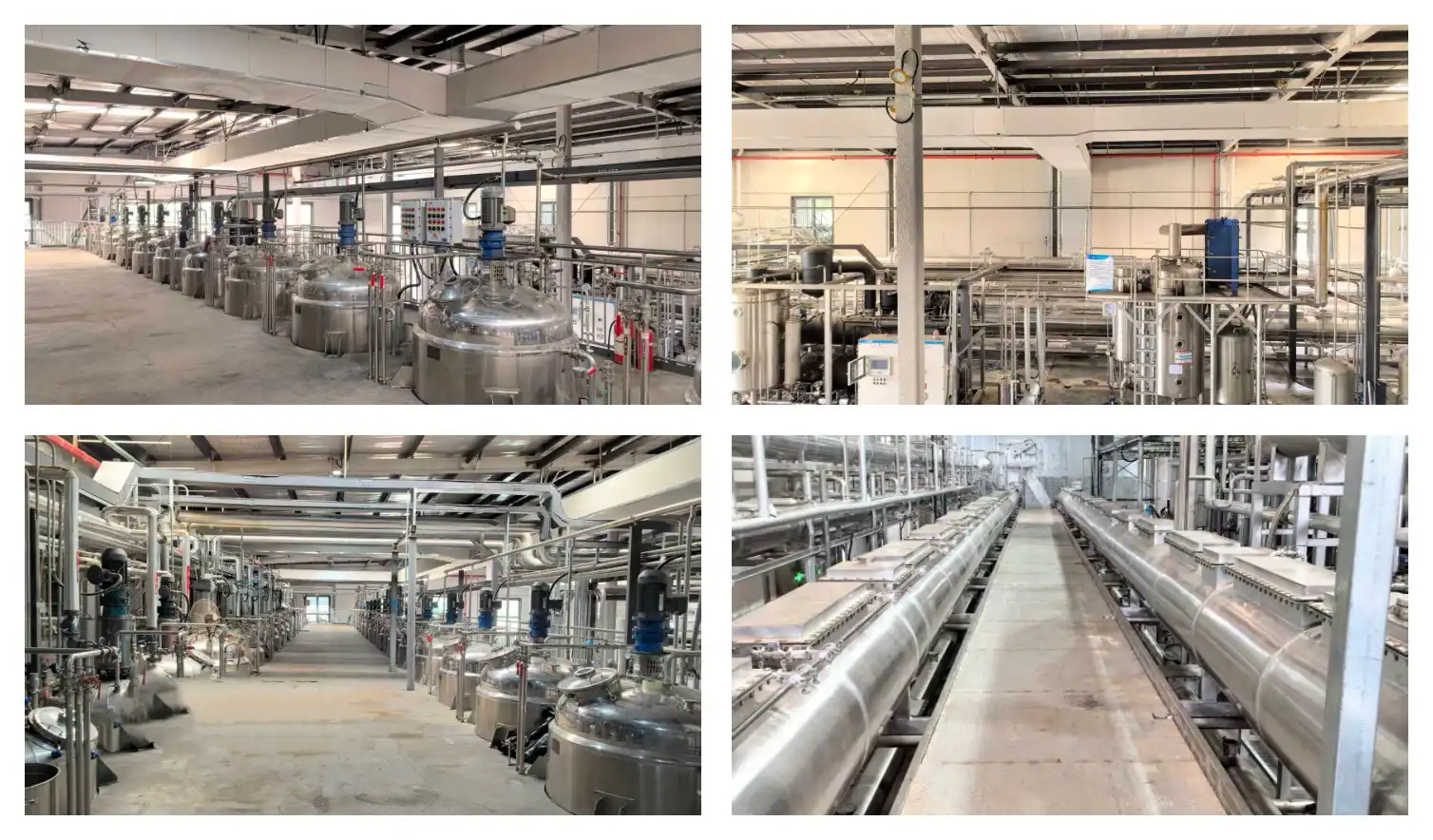
The way the powder is dried affects both the quality of the powder and how it reacts with other ingredients. The ways that UNIWELL uses, gentle spray drying and air drying, keep the heat-sensitive boswellic acids intact while making a fine, uniform powder that is easy to work with. Drying too quickly can destroy the active ingredient and leave behind a sticky, rubbery powder that doesn't work well in pill filling machines.
How to Source Boswellia Extract Powder: Procurement Tips for B2B Buyers
Supplier Qualification Criteria
It takes more than looking at a product description to find a good source. Facility certification (GMP, ISO 22000), legal paperwork that is important to your target market, and a history of consistent service should all be part of the evaluation. Before you place a trial order, make sure you get samples of boswellia extract powder with full CoA, TDS, and SDS documentation. If a supplier can give you application-specific advice, like compatibility data for curcumin co-formulation or stability reports for gummy matrices, that shows they have a lot of technical knowledge and will protect your formulation investment.
Negotiating Bulk Procurement
Prices for boswellia extract in the market vary a lot depending on the grade, the scope of the approval, and the number of orders. There will be a price difference between a titration-graded generic and a 65% HPLC-verified extract from a fully certified supplier, but in any regulated market, the quality difference is worth it. Instead of open-ended spot purchases, try to negotiate annual contracts with fixed prices that are tied to quality standards. This guards against both changes in the supplier chain and changes in the specifications.
Logistics and Documentation
When you buy something from another country, you have to think about things like customs rules, paperwork needs, and the cold chain. A seller with established freight partnerships for air, sea, and land, as well as the ability to provide a full package of export documents, lowers risk at the border. Standard orders should be shipped within three business days from a strategic inventory provider. Lead times longer than two weeks for in-stock items are a sign of inventory management problems that should be looked into.
Conclusion
Selecting the right boswellia extract powder comes down to three non-negotiable pillars: verified standardization via HPLC, a complete certification and stability documentation package, and a supplier with the technical depth to support your formulation goals. Whether you're building a 65% entry-level joint health SKU or a 90% premium practitioner formula, the decision framework remains the same — confirm the science, audit the documentation, and validate through trial orders before committing to annual volume. A disciplined procurement process at this stage pays dividends across your entire product lifecycle.
FAQ
1. What boswellic acid percentage should I specify for a joint health formula?
The clinical standard for most B2B nutritional uses is at least 65% boswellic acids, which can be confirmed by HPLC. When brands want to be seen as high-end or professional, they usually choose grades of 85% or 90% to back up their label claims and keep the weight of each pill smaller.
2. How do I distinguish HPLC-verified boswellic acid content from titration-based claims?
Check the "Testing Method" field every time you ask for the CoA. Titration gives you a rough idea of the total organic acids while HPLC gives you specific acid fractions. If the seller can't say what method they will use, you can assume that the claim is false.
3. Is boswellia extract powder stable in combination with curcumin?
Yes, but stability depends on how it is made. Ask your provider for accelerated stability data under settings that are similar to the ones you plan to use for packing and storage. Interaction risks can be controlled by choosing the right excipients and keeping moisture levels in check.
4. What certifications should I require from a boswellia extract supplier for the U.S. market?
Registration with the FDA, ISO 22000, and GMP compliance are the bare minimum. Certificates are needed for goods that are meant to be sold in Halal or Kosher outlets. Verification of the COA by a third party adds another level of trust.
5. Can I request custom specifications or documentation for specific markets?
Yes, reputable suppliers offer ODM/OEM support, which includes custom extraction ratios, regulatory documentation for each market (USP/EP, Novel Food), and customized COA formats. During the sample evaluation stage, make sure that this ability is present.
Partner With UNIWELL for Your Boswellia Extract Powder Supply
UNIWELL is a reliable company that has been making boswellia extract powder for over 10 years and has FDA, ISO 22000, KOSHER, and HALAL approvals. We offer standard grades of 65% to 90% boswellic acids that have been tested for quality using HPLC. These are backed up by 24-month stability data, batch-specific COAs, and all the regulatory paperwork needed for both U.S. and international markets. Our 100+ metric ton collection means that most orders are shipped within three business days. To get examples and start the qualification process right away, email our expert team at info@uniwellbio.com.
References
1. Siddiqui, M. Z. (2011). Boswellia serrata, a potential antiinflammatory agent: An overview. Indian Journal of Pharmaceutical Sciences, 73(3), 255–261.
2. Abdel-Tawab, M., Werz, O., & Schubert-Zsilavecz, M. (2011). Boswellia serrata: An overall assessment of in vitro, preclinical, pharmacokinetic and clinical data. Clinical Pharmacokinetics, 50(6), 349–369.
3. Kimmatkar, N., Thawani, V., Hingorani, L., & Khiyani, R. (2003). Efficacy and tolerability of Boswellia serrata extract in treatment of osteoarthritis of knee. Phytomedicine, 10(1), 3–7.
4. Gupta, I., et al. (1997). Effects of Boswellia serrata gum resin in patients with ulcerative colitis. European Journal of Medical Research, 2(1), 37–43.
5. U.S. Pharmacopeial Convention. (2023). USP–NF General Chapters: Botanical Extracts. United States Pharmacopeial Convention.
6. European Food Safety Authority (EFSA). (2020). Safety of Boswellia serrata oleogum resin extract as a novel food. EFSA Journal, 18(10), e06247.
Have a project in mind? Share your requirements — we’ll turn your ideas into reliable products.