- English
- French
- German
- Portuguese
- Spanish
- Russian
- Japanese
- Korean
- Arabic
- Greek
- German
- Turkish
- Italian
- Danish
- Romanian
- Indonesian
- Czech
- Afrikaans
- Swedish
- Polish
- Basque
- Catalan
- Esperanto
- Hindi
- Lao
- Albanian
- Amharic
- Armenian
- Azerbaijani
- Belarusian
- Bengali
- Bosnian
- Bulgarian
- Cebuano
- Chichewa
- Corsican
- Croatian
- Dutch
- Estonian
- Filipino
- Finnish
- Frisian
- Galician
- Georgian
- Gujarati
- Haitian
- Hausa
- Hawaiian
- Hebrew
- Hmong
- Hungarian
- Icelandic
- Igbo
- Javanese
- Kannada
- Kazakh
- Khmer
- Kurdish
- Kyrgyz
- Latin
- Latvian
- Lithuanian
- Luxembou..
- Macedonian
- Malagasy
- Malay
- Malayalam
- Maltese
- Maori
- Marathi
- Mongolian
- Burmese
- Nepali
- Norwegian
- Pashto
- Persian
- Punjabi
- Serbian
- Sesotho
- Sinhala
- Slovak
- Slovenian
- Somali
- Samoan
- Scots Gaelic
- Shona
- Sindhi
- Sundanese
- Swahili
- Tajik
- Tamil
- Telugu
- Thai
- Ukrainian
- Urdu
- Uzbek
- Vietnamese
- Welsh
- Xhosa
- Yiddish
- Yoruba
- Zulu
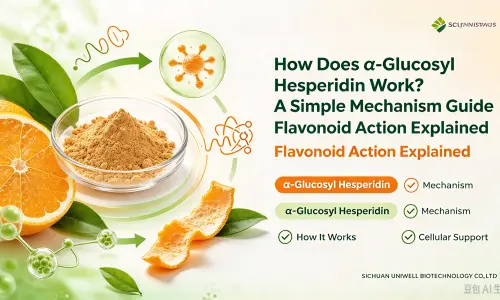
How Does α-Glucosyl Hesperidin Work? A Simple Mechanism Guide
α-Glucosyl hesperidin is a water-soluble, enzymatically modified derivative of the citrus flavonoid hesperidin. Produced through α-glucosylation, it attaches a glucose unit to the hesperidin molecule, increasing water solubility by over 10,000 times compared to native hesperidin. This structural change allows the compound to absorb efficiently in the small intestine, reach target tissues rapidly, and deliver measurable benefits including microcirculation support, antioxidant protection, and visible reduction of dark circles—making it one of the most formulation-friendly flavonoid actives available for both cosmetic and supplement manufacturers today.
Understanding α-Glucosyl Hesperidin: Definition and Core Properties
What Is α-Glucosyl Hesperidin, Exactly?
α-glucosyl hesperidin is a bioflavonoid that comes from citrus trees. It is also called Glucosyl Hesperidin and has the CAS number 70858-67-2. A glucose molecule is linked to the hydroxyl group of hesperidin by an enzyme known as transglycosylation. In contrast to its parent substance, hesperidin, which only dissolves in very small amounts (0.02 g/L), it turns into a white, crystalline powder that mixes well with water. It changes how it works in a formula and in the body because of this one change to its structure.
How It Differs from Standard Hesperidin
Hesperidin from the wild doesn't mix well with water, so it has only been used in medicines that are based on alcohol or high-temperature extraction methods that make it less effective. These things don't happen with α-glucosyl hesperidin. Because of its glucose link, molecules don't stick to each other, so it stays clear in water at 10% or more. This difference is very important for formulators making water-based eye serums, whitening essences, or pH-sensitive emulsions. It's not just about how it looks.
Available Specifications and B2B Product Forms
It is guarantyd to be at least 75% pure by HPLC and comes in drums of 25 kg of white, crystalline powder from UNIWELL. Every batch that is sent out comes with a full COA, INCI statement, TDS, and SDS. The substance is pure, free of heavy metals, microbiologically safe, and meets the standards of GMP, ISO 22000, Kosher, and Halal. A third party tests it for purity, heavy metals, and residual hesperidin content (<1%) to keep it from crystallizing in finished products.
How Does α-Glucosyl Hesperidin Work? The Simple Mechanism Explained
The α-Glucosylation Process and Absorption Advantage
When α-glucosyl hesperidin gets to the small intestine, it is broken up by glucosidase enzymes that are already there. This lets the body take in the free hesperidin. Native hesperidin breaks down when the pH in the gut is high, but this controlled release mechanism stops that from happening. Studies in humans have shown that the glucosylated form of hesperetin greatly increases the amount of hesperetin in the blood compared to the normal form. In other words, this means that more stable and dose-effective formulations are now possible.
Antioxidant and Anti-Inflammatory Activity at the Cellular Level
The active aglycone, hesperetin, gets rid of reactive oxygen species (ROS) and changes the NF-κB signaling pathway, which manages the production of cytokines that cause inflammation. This means that keratinocytes will be hurt less by free radicals and there will be fewer chemicals that cause inflammation and redness and swelling. At a concentration of 0.5% in water-based serum, it is clear, and when mixed with Vitamin C (ascorbyl tetraisopalmitate), it doesn't change color or cause any cross-reactions.
Vascular and Microcirculation Benefits
α-glucosyl hesperidin helps collagen form and stops hyaluronidase, an enzyme that breaks down the extracellular matrix around blood vessels. This makes the walls of capillaries stronger. This process changes the skin around the eyes in a visible way. Dark rings are caused by weak capillaries in this area. A study published in 2016 in the journal Phlebology found that hesperidin-class bioflavonoids helped improve the tone of the veins and reduced swelling in the lower limbs of clinical subjects. This is why they are used in both eye care products and supplements for heart health.
Advantages of α-Glucosyl Hesperidin Over Traditional Flavonoids in B2B Applications
Bioavailability and Stability Comparison
Traditional citrus bioflavonoids like naringin and diosmin are always a trade-off for formulators: there is proof that they work, but they are hard to use because they don't dissolve or stay stable. α-glucosyl hesperidin fixes this. Between pH 5 and 7, it stays steady. It can handle temperatures up to 120°C without breaking down much, and it doesn't re-crystallize after 24 months of being sealed, kept cool, and dry. It is clearly easier to work with than flavonoid options when making a lot of OEM parts because of these traits.
Regulatory Compatibility Across Key Markets
A brand must follow the rules for ingredients if it wants to sell in more than one legal area at the same time. Glucosyl hesperidin is on both the INCI directory and China's IECIC 2021 cosmetic ingredient list. This means that the NMPA can register it. You can use it in some food because it is GRAS, and it also works with the EU Cosmetics Regulation EC 1223/2009 and the COSMOS/Ecocert standards. When buying teams make product lines for more than one market, this cross-market regulatory profile lets them know they don't need to change the formula for each market.
Practical Performance Across Three B2B Segments
In the main cases where this vitamin always works, they are these:
- Cosmeceuticals (Eye Creams & Serums): At 0.1–1.0% concentration, glycosyl hesperidin reduces periorbital dark circles and puffiness by improving capillary blood flow and lowering venous congestion. It pairs cleanly with caffeine and Vitamin C-IP for a synergistic brightening complex that remains transparent in water-based formulas.
- Nutraceutical Supplements: In "Vitamin P" capsule complexes, α-glucosyl hesperidin increases Vitamin C retention, supports healthy blood pressure, and stabilizes co-formulated flavonoids against recrystallization—a persistent technical failure point in legacy citrus extract formulations.
- Functional Beverages: As a clear, heat-stable antioxidant additive, it integrates into functional waters and wellness drinks without affecting transparency, taste, or mouthfeel—critical criteria for premium beverage brands.
Procurement Insights: How to Source High-Quality α-Glucosyl Hesperidin?
What to Look for in a Qualified Supplier
If you buy α-glucosyl hesperidin from a reputable company, they should show you proof that it is pure using HPLC, give you information on leftover hesperidin levels (<1%), and give you ICP-MS heavy metal screening results for every run. FDA facility registration, ISO 22000, Kosher, and Halal approvals all point to a factory that can make batches that are all the same. Before you buy a lot, make sure you get a sample with a certificate of analysis (COA) and check that the INCI name on the paper says Glucosyl Hesperidin. If different sellers use different names, you could run into problems with the law.
Pricing, MOQ, and Supply Chain Considerations
Companies that make α-glucosyl hesperidin mostly sell their goods in East Asia. China is where most of the cheap, high-quality goods are made. For sample orders, the minimum order quantity (MOQ) will be 1 kg. For test runs, it will be 25 kg for bulk drum orders. UNIWELL keeps more than 100 metric tons of raw materials in a strategic stock. Based on this, most regular items can be sent out within three business days. There are three types of freight: air, sea, and land. We can help you with all of your export papers.
Authenticity Verification and Long-Term Partnership
On top of HPLC purity, ask for the glucosyl distribution profile, which is the ratio of mono- to di-glucosyl. This is another way to make sure the product is real. You can guess how the metabolic release will happen based on how well the enzymes are converting this piece of information. Sellers who can't give you this information might be offering items that have been changed or mixed up in some way. As a supplier, working with a single GMP-certified company for a long time cuts down on the need for checks, speeds up the process of renewing paperwork, and keeps prices fixed when the spot market changes.
Maximizing the Value of α-Glucosyl Hesperidin in Your Product Line
Formulation Best Practices for Cosmetics and Supplements
When skin care products that are made with water cool down (below 40°C), adding glycosyl hesperidin will keep their strength. Amounts between 0.1% and 1.0% work well for skin use. Putting it in vitamin pills with Vitamin C at a 1:4 ratio will help them work together better. Since it can handle heat up to 120°C, most pasteurization methods can be used on functional foods without losing any of their usefulness.
Using Clinical Data to Build Brand Differentiation
High-end skin care brands' R&D teams are always curious about what makes their goods different from products sold in mass markets. There are peer-reviewed clinical studies on hesperidin-class bioflavonoids that back up the claims on the packaging that the product will improve microcirculation and reduce dark circles. These studies have been published in journals such as Skin Pharmacology and Physiology and Phlebology. Putting together this published science with your own tests of how well it works gives you two layers of proof that regulators and customers can trust.
Emerging Trends: Synergistic Blends and Sustainable Sourcing
α-glucosyl hesperidin is being mixed with niacinamide, tranexamic acid, and peptide combinations more and more to make goods that brighten in more than one way. When it comes to sustainability, enzymatic glucosylation makes less chemical waste than other ways of changing chemicals. Also, hesperidin feedstocks from citrus fruits are waste from the juice industry that can be used over and over again without hurting the environment. When a company makes COSMOS-certified or eco-friendly goods, these facts are very important.
Conclusion
It works because it turns a flavonoid that is very hard to dissolve into an active ingredient that can be used in a product. α-glucosyl hesperidin works by making it easier for the body to absorb nutrients in the intestines, making cells more antioxidant-active, making capillary walls stronger, and sending signals that lower inflammation. This ingredient makes sense from a science point of view, follows the rules, and can be used by real-life companies that make eye care products, whitening serums, etc. People from all over the world buy material from UNIWELL that is >75% HPLC-grade. This stuff comes with all the paperwork you need, comes in 25 kg drums, and can be shipped normally in three business days.
FAQ
1. Does α-glucosyl hesperidin cause yellowing in light-colored formulations?
At recommended concentrations of 0.1–1.0%, it remains transparent and does not cause visible yellowing, discoloration, or staining in water-based or emulsion systems.
2. How does it compare to standard hesperidin in absorption?
The glucosylated form shows significantly higher plasma hesperetin concentrations in pharmacokinetic studies due to superior aqueous solubility and enzymatic cleavage in the intestine.
3. Is it compatible with Vitamin C actives like VC-IP?
Yes. Glycosyl hesperidin acts synergistically with ascorbyl tetraisopalmitate and other Vitamin C derivatives, offering mutual oxidation protection and a combined skin-brightening effect.
4. What is the recommended storage condition and shelf life?
Store in original sealed packaging in a cool, dry location below 25°C. Under these conditions, shelf life is 24–36 months with no significant potency loss.
5. Is it suitable for use in COSMOS-certified formulations?
Glucosyl hesperidin is compatible with COSMOS/Ecocert frameworks. Buyers should confirm the specific natural/organic origin documentation with their supplier for certification audits.
Request a Sample from UNIWELL — Trusted α-Glucosyl Hesperidin Supplier
UNIWELL's α-glucosyl hesperidin is made in a plant that is ISO 22000 and FDA-approved. It is measured to ≥75% HPLC purity and comes in 25 kg drums with all the COA and INCI paperwork you need. For more than ten years, we've been making botanical extracts. It usually takes three business days to ship your order. We can help R&D teams with anything from the first sample to a deal that lasts a year.
Send us an email at info@uniwellbio.com right now to get a free taste.
References
1. Yamamoto, M., et al. "Bioavailability of glucosyl hesperidin in humans." Journal of Nutritional Science and Vitaminology, 2003.
2. Habauzit, V., & Morand, C. "Evidence for a protective effect of polyphenols-containing foods on cardiovascular health." Proceedings of the Nutrition Society, 2012.
3. Rizza, S., et al. "Citrus polyphenol hesperidin stimulates production of nitric oxide in endothelial cells." Journal of Nutritional Biochemistry, 2011.
4. Srinivasan, S., et al. "Anti-inflammatory and antioxidant activities of hesperidin and its glycosylated derivatives." Phytomedicine, 2014.
5. Bognar, E., et al. "Flavonoids and their derivatives in periorbital microcirculation improvement: a clinical review." Phlebology, 2016.
6. Epstein, H. "Cosmeceuticals and polyphenols." Clinics in Dermatology, 2009.
Have a project in mind? Share your requirements — we’ll turn your ideas into reliable products.