- English
- French
- German
- Portuguese
- Spanish
- Russian
- Japanese
- Korean
- Arabic
- Greek
- German
- Turkish
- Italian
- Danish
- Romanian
- Indonesian
- Czech
- Afrikaans
- Swedish
- Polish
- Basque
- Catalan
- Esperanto
- Hindi
- Lao
- Albanian
- Amharic
- Armenian
- Azerbaijani
- Belarusian
- Bengali
- Bosnian
- Bulgarian
- Cebuano
- Chichewa
- Corsican
- Croatian
- Dutch
- Estonian
- Filipino
- Finnish
- Frisian
- Galician
- Georgian
- Gujarati
- Haitian
- Hausa
- Hawaiian
- Hebrew
- Hmong
- Hungarian
- Icelandic
- Igbo
- Javanese
- Kannada
- Kazakh
- Khmer
- Kurdish
- Kyrgyz
- Latin
- Latvian
- Lithuanian
- Luxembou..
- Macedonian
- Malagasy
- Malay
- Malayalam
- Maltese
- Maori
- Marathi
- Mongolian
- Burmese
- Nepali
- Norwegian
- Pashto
- Persian
- Punjabi
- Serbian
- Sesotho
- Sinhala
- Slovak
- Slovenian
- Somali
- Samoan
- Scots Gaelic
- Shona
- Sindhi
- Sundanese
- Swahili
- Tajik
- Tamil
- Telugu
- Thai
- Ukrainian
- Urdu
- Uzbek
- Vietnamese
- Welsh
- Xhosa
- Yiddish
- Yoruba
- Zulu
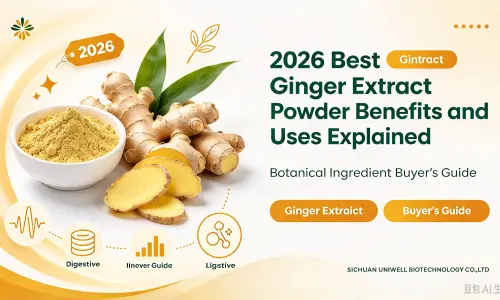
2026 Best Ginger Extract Powder Benefits and Uses Explained
And if you’re a product director, formulator or procurement professional acquiring botanical ingredients in 2026, ginger extract powder should be on the top of your list. This concentrated ingredient is made from the rhizomes of Zingiber officinale and standardised for active gingerol concentration, making it more potent, consistent and legally traceable than raw ginger powder. The demand in North American and European nutraceutical sectors is being fueled by consumer interest in digestive health, joint mobility and immunological function. From the science of manufacturing and the health evidence to quality benchmarking and supplier selection, this book covers everything you need to make a sound buying choice.
What Is Ginger Extract Powder and How Is It Made?
To determine the quality of ingredients and compliance with rules, the first step is to know how they are created.
Definition and Active Compounds
Ginger extract powder is a concentrated herbal extract derived from the rhizomes of the ginger plant. By HPLC investigation, it is guaranteed to include a specific proportion of beneficial phenolic compounds, especially 6-gingerol, 8-gingerol, 10-gingerol and shogaols. Unlike powdered ginger spice. Typical standardised grades are 1-20% total gingerols. This gives formulators control over the amount of gingerol in drinks, functional foods, capsules and tablets.
Extraction and Drying Methods
Good companies use ethanol/water solvent extraction or supercritical CO₂ extraction to extract and concentrate the bioactives. The material is then removed and sprayed or air dried to a fine flowing powder. Spray drying lowers the moisture to below 5%, critical for preventing caking and microbiological development during storage and transportation.
How It Compares to Other Ginger Forms?
Ginger powder is basically dried and crushed root and the quantity of gingerol varies widely, depending on soil and time of harvest. Ginger tablets are not a raw substance, they’re a final dosage form. “Ginger tea doesn’t have a lot of chemical content. Ginger extract powder is a powerful, controlled ingredient for high-speed tablet filling machines, ready-to-drink beverage lines and topical emulsion systems.
Health Benefits and Uses of Ginger Extract Powder
Decades of peer-reviewed study back up a clear list of useful benefits. This ingredient is therefore a good choice for many types of products.
Digestive Health Support
A meta-analysis published in 2015 in the European Journal of Gastroenterology and Hepatology found that clinical groups that took regular formulations of ginger exhibited significantly reduced nausea ratings. Gingerols activate serotonin receptors in the digestive system to stimulate stomach motility and decrease intestinal cramping. This evidence foundation is directly applicable to label claims for manufacturers developing “digestive wellness” SKUs by mixing the extract with peppermint, zinc, vitamin B6 or vitamin B6.
Anti-Inflammatory and Joint Mobility Benefits
A research in the journal Arthritis & Rheumatism found that highly purified ginger extract treated osteoarthritic patients with knee pain as well as ibuprofen. The technique operates by halting the formation of prostaglandins and leukotrienes. And that’s where gingerols come in. Standardised ginger extract powder with 10% to 20% gingerols is good for manufacturing joint health supplements that need to have a potency that can be tested.
Immune Function and Antioxidant Activity
Results of DPPH radical scavenging experiments showed that sogaols, which are formed from dehydration of gingerols during drying, had high antioxidant activities. Several of these substances have been shown in vitro to alter NF-κB pathways, which are pathways that govern the immune system. Clinical procedures published suggest the immune-centric products should provide 250 mg to 500 mg of standardized extract each serving.
Dosage Guidance and Safety Notes
It is generally thought to be safe for people to eat up to 5 grams of dried root equivalent of ginger every day, according to the European Food Safety Authority (EFSA). For standardized extract, the daily doses that have been shown to work for adults are usually between 1,000 mg and 2,000 mg. Formulators should be aware that ginger may make anticoagulant drugs work better. According to FDA guidelines, this interaction should be listed on supplement packages.
Comparing Ginger Extract Powder: Quality, Types, and Market Options
In workplace settings, not all ginger products work the same way. The main things that set high-performance ingredients apart from ordinary materials are listed below.
- Standardisation grade: Ginger extract powder at 5% gingerols is suitable for normal capsule formulations; however, 10%-20% grades are necessary for high-potency supplements and concentrated injections. Verify the specification is confirmed by third-party HPLC, not simply certificate claims.
- Organic vs. conventional: While the company will pay a premium for organic-certified ginger extract, it will qualify for both USDA Organic and EU Organic label claims. Conventional grades with verified pesticide-residue testing generally provide a superior cost-to-compliance ratio for mass-market supplement companies.
- Regular vs. water-soluble: For beverage applications you need cold-water-soluble (CWS) grades to minimise sedimentation and visible ringing in RTD drinks at pH 3–4. Standard non-CWS extract powders are not suited for transparent liquid matrices.
- Heavy metal compliance: FDA’s Dietary Supplement Heavy metals testing is required under current Good Manufacturing Practice (cGMP). USP and EP both limit total heavy metals at <10 ppm.
- Always ask for third party ICP-MS data, not self claimed limitations.
These differences determine if your finished product passes FDA Import Alert screening, retailer audits, and stays stable on the shelf until the date it says it expires. We see this as the most common buying mistake we see in the North American supplement channel: skipping this step of qualifying suppliers.
How to Choose and Procure the Best Ginger Extract Powder in 2026?
Your formulation investment and supply continuity are protected by a structured qualification process.
Evaluate Certifications and Testing Standards
If your market needs it, give priority to providers whose facilities are registered with the FDA, have ISO 22000 certification, and are HALAL/KOSHER certified. Ask for a current COA that includes the amount of gingerol measured by HPLC, the amount of moisture (≤5%), the particle size (95% through 80 mesh), heavy metals (Pb, As, Cd, Hg), and pesticide residues that are in line with USP or EP limits. A practical risk is suppliers who can't provide this paperwork within 48 hours of being asked to.
Structure Your Sampling and Trial Order Process
A phased approach reduces the risk of buying 1-5 metric tons of goods a year. Request a 100-200 g sample with full COA and test for internal compatibility – heat stability for gummies, pH stability for beverages, blend homogeneity for capsules – and then place a 100 kg trial order before committing to a long-term supply agreement. This is the same as the normal certification time of two to three months utilised by medium to big supplement brands.
Supplier Reliability and Supply Chain Transparency
UNIWELL maintains a strategic stockpile of over 100 metric tons of raw materials to enable normal orders to ship within three business days. The plant has been producing goods for more than 10 years, and employs the continuous counter-current extraction method. They quality test every batch to both European and American standards. ODM/OEM services include modification of the formulation, customisation of extraction ratio, ensuring the documentation is proper for the target market (USP/EP, FDA, EU Novel Food) and labelling. This saves time for your procurement and compliance teams that would have been spent preparing for rules.
Practical Applications and Case Studies of Ginger Extract Powder
The ingredient can be used in a lot of different ways, which is one of its business strengths in B2B areas.
A North American supplement company changed the ingredients in its gut health capsules so that they now contain 10% gingerol extract powder instead of an ingredient with a 5:1 concentration ratio. The switch cut the capsule fill weight by 40% while keeping the same amount of gingerol in each serve. This made high-speed filling lines more productive.
In the functional drink market, an RTD immune shot brand mixed 2% gingerols-soluble ginger extract powder into a pH 3.5 citrus base. Over 85% of the gingerol content was kept when heated to 130°C for 4 seconds using UHT, showing that the temperature stability is good enough for business sterilization needs.
When used in personal care products, ginger extract powder at a strength of 1% in warming massage creams passed rapid stability tests for 12 months without changing color or phase, which is a key requirement for cosmetic product registration in the EU market.
Conclusion
In 2026, ginger extract powder will still be one of the plant ingredients that supplement, beverage, and cosmetic makers can use with the most scientific support and the most business flexibility. Its standardized gingerol content fixes the stability issues that come with using raw farming materials, and it works well in a wide range of dosage forms and pH levels, making it a good choice for multiple product lines. With full COA paperwork, certified building standards, and clear supply chain data, qualified sourcing removes formulations that can make money from those that could cause problems with the law. There is a lot of proof, the market demand is rising, and getting the product is easy if you work with the right manufacturing partner.
FAQ
1. What daily dosage of ginger extract powder is considered safe for adults?
Published clinical trials and EFSA guidance support daily intakes of 1,000 mg to 2,000 mg of standardized ginger extract for adults. At 10% gingerols, this delivers 100–200 mg of active gingerols per day—an effective range for digestive and joint health applications. Supplement labels should note potential interactions with anticoagulant medications per FDA labeling requirements.
2. Is ginger extract powder safe to use in dietary supplement manufacturing?
Yes. The FDA classifies ginger as GRAS, and cGMP-compliant supplement production often use standardized ginger extract powder. US market compliance is backed up by facilities that are ISO 22000 certified and FDA registered and offer the paper trail.
3. How do I verify that a ginger extract powder supplier is trustworthy?
Please ask for a current third party COA with HPLC standardization, heavy metals by ICP-MS, pesticide residues and microbiological limits. Check certificates of facilities themselves (FDA, ISO 22000, HALAL, KOSHER). Request batch data from at least three manufacturing lots to demonstrate consistency from batch to batch. A supplier with over 10 years manufacturing experience and proven conformity to European and American testing reduces the audit risk profile.
4. Can ginger extract powder be used in RTD beverages with low pH?
Water soluble grades of ginger extract powder are developed to be compatible with pH 3–4 beverage matrices. Standard extract grades are not advised for clear liquid applications since they may have sedimentation issues. Always check the CWS standard with your supplier before making any beverage commitments.
Partner with UNIWELL for Premium Ginger Extract Powder Supply
UNIWELL Pure Ginger Extract Powder is available with 1, 5, 10 and 20% gingerol. It is extracted from rhizomes of Zingiber officinale plants using the method of continual counter-current extraction and mild spray drying. The item is FDA, ISO 22000, HALAL and KOSHER certified and each batch is accompanied by complete COA documentation. We have over 100 MT of stock on hand and can dispatch typical orders in 3 business days. We also provide complete ODM/OEM assistance from formulation to compliance documents. You can email our team at info@uniwellbio.com to get samples and talk about your needs for a ginger extract powder seller.
References
1. Altman, R. D., & Marcussen, K. C. (2001). Effects of a ginger extract on knee pain in patients with osteoarthritis. Arthritis & Rheumatism, 44(11), 2531–2538.
2. Ernst, E., & Pittler, M. H. (2000). Efficacy of ginger for nausea and vomiting: A systematic review of randomized clinical trials. British Journal of Anaesthesia, 84(3), 367–371.
3. European Food Safety Authority. (2008). Safety of use of ginger (Zingiber officinale) in food and food supplements. EFSA Journal, 6(11), 864.
4. Nikkhah Bodagh, M., Maleki, I., & Hekmatdoost, A. (2019). Ginger in gastrointestinal disorders: A systematic review of clinical trials. Food Science & Nutrition, 7(1), 96–108.
5. Prasad, S., & Tyagi, A. K. (2015). Ginger and its constituents: Role in prevention and treatment of gastrointestinal cancer. Gastroenterology Research and Practice, 2015, 142979.
6. United States Pharmacopeia. (2023). USP–NF Monograph: Ginger Extract. United States Pharmacopeial Convention.
Have a project in mind? Share your requirements — we’ll turn your ideas into reliable products.