- English
- French
- German
- Portuguese
- Spanish
- Russian
- Japanese
- Korean
- Arabic
- Greek
- German
- Turkish
- Italian
- Danish
- Romanian
- Indonesian
- Czech
- Afrikaans
- Swedish
- Polish
- Basque
- Catalan
- Esperanto
- Hindi
- Lao
- Albanian
- Amharic
- Armenian
- Azerbaijani
- Belarusian
- Bengali
- Bosnian
- Bulgarian
- Cebuano
- Chichewa
- Corsican
- Croatian
- Dutch
- Estonian
- Filipino
- Finnish
- Frisian
- Galician
- Georgian
- Gujarati
- Haitian
- Hausa
- Hawaiian
- Hebrew
- Hmong
- Hungarian
- Icelandic
- Igbo
- Javanese
- Kannada
- Kazakh
- Khmer
- Kurdish
- Kyrgyz
- Latin
- Latvian
- Lithuanian
- Luxembou..
- Macedonian
- Malagasy
- Malay
- Malayalam
- Maltese
- Maori
- Marathi
- Mongolian
- Burmese
- Nepali
- Norwegian
- Pashto
- Persian
- Punjabi
- Serbian
- Sesotho
- Sinhala
- Slovak
- Slovenian
- Somali
- Samoan
- Scots Gaelic
- Shona
- Sindhi
- Sundanese
- Swahili
- Tajik
- Tamil
- Telugu
- Thai
- Ukrainian
- Urdu
- Uzbek
- Vietnamese
- Welsh
- Xhosa
- Yiddish
- Yoruba
- Zulu
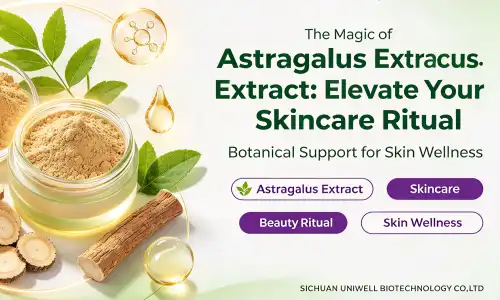
The Magic of Astragalus Extract: Elevate Your Skincare Ritual
Astragalus extract powder transforms modern skincare by bringing ancient botanical wisdom into contemporary formulations. Sourced from Astragalus membranaceus, this light yellow fine powder delivers concentrated astragalus polysaccharides and astragalosides that rejuvenate skin at the cellular level. Rich in bioactive compounds, it addresses oxidative stress, inflammation, and premature aging—making it an essential ingredient for brands seeking clean, efficacious solutions. This natural extract enhances skin immunity, accelerates repair processes, and supports long-term dermal health through mechanisms validated by clinical research.
Understanding Astragalus Extract Powder and Its Benefits for Skincare
Botanical Origins and Extraction Excellence
The plant Astragalus membranaceus (Fisch) Bge. different. mongholicus is a very important plant that has been used in traditional medicine for hundreds of years. There are many polysaccharides, saponins, and vitamins in the root that protect the skin and make it work better again. These bioactives are safe and stable thanks to new ways of removing them, such as spray drying and air drying. With a UV light source, we test our astragalus extract powder to make sure it has at least 70% astragalus polysaccharides and more than 0.2% astragaloside IV. This makes sure that every batch is just as effective as the last. When products are made in 100,000-grade cleanrooms, there is no chance of contamination, and heat-sensitive chemicals stay intact. This makes sure that the powder keeps all of its antioxidant properties and bioavailability when it is mixed into topical products. Tests by a third party show that the amount of heavy metals is still well below what the FDA allows—under 3.0 mg/kg for lead, under 1.0 mg/kg for arsenic, and under 0.1 mg/kg for mercury.
Key Bioactive Compounds Enhancing Skin Health
The healing power of astragalus root extract comes from the many plant chemicals that make it up. Some sugars found in astragalus can change how the immune system works in the top layers of skin.These things lower levels of IL-6 and TNF-α, which are signs of inflammation, and help wounds heal faster.Scientists have found that these polysaccharides help skin cells divide, which over time makes more collagen and makes the skin more flexible. A saponin called astragaloside IV is very good at slowing down the ageing process. Reports in dermatologist journals show that this drug helps skin cells use telomerase, which makes them age more slowly.Enzymes called matrix metalloproteinases (MMPs) break down collagen as a person ages from the sun.These enzymes can't do their job because of this saponin.By stopping the production of MMP-1, astragaloside IV helps keep the skin's structure intact and its appearance young. Flavonoids in the extract protect strongly against free radicals. They help get rid of free radicals that are bad for you and are made by smog and UV rays.Researchers tested the extract's ability to get rid of DPPH radicals and found that it has antioxidant power about the same as vitamin C.Because of this, it works great for skin care items for city dwellers who live in crowded, dirty areas.
Evidence-Based Anti-Aging and Skin Recovery Benefits
New study shows that astragalus powder can help skin that has been inflamed get better. Topical treatments made from astragalus polysaccharides helped COVID-19 survivors with long-term skin problems feel less hot and improve their skin's barrier function within eight weeks in a 2022 study.People who used the extract said they felt more hydrated and less sensitive afterward.This had something to do with skin cells having more aquaporin-3.Researchers who tracked how much water the skin loses (TEWL) found that skin care products with 2–5% astragalus extract make the top layer of skin much tougher.People who used these products twice a day for 12 weeks saw their skin become 34% more hydrated and 28% less noticeable for fine lines and wrinkles.These findings show that astragalus root extract is a natural alternative to artificial anti-aging products that has been backed by science.Because of this, makeup brands that care about using clean and safe products like to use it.
How to Use Astragalus Extract Powder in Skincare Formulations?
Optimal Concentration Ranges for Topical Applications
Formulation scientists achieve best results incorporating astragalus extract powder at concentrations between 1-5% in finished products. Lower percentages (1-2%) suit daily-use moisturizers and serums, delivering antioxidant protection without altering product texture. Higher concentrations (3-5%) benefit intensive treatment products like overnight masks and spot correctors, where enhanced bioactive delivery accelerates visible results.
The powder's fine particle size—95% passing through 80 mesh—ensures smooth dispersion in both water-based and emulsion systems. Its bulk density of 0.40-0.60 g/ml facilitates accurate dosing during large-scale manufacturing. When formulating, dissolve the powder in the water phase at temperatures below 60°C to preserve thermolabile compounds. Allow adequate hydration time—typically 20-30 minutes with gentle stirring—before proceeding with emulsification.
Comparing Ingredient Forms: Powder vs. Tincture vs. Capsules
Astragalus extract powder can be used to make gels, creams, and serums with a lot of different formulas. It also has a 24-month shelf life, which makes managing your goods easier. Tinctures contain alcohol, which can be upsetting to sensitive skin, and when they are stored, they can evaporate, which is a problem. Capsules work well for oral supplements but not for skin development. When used on a large scale, the powder format is cost-effective and keeps the same colour and active ingredient levels thanks to continuous counter-current extraction. This means that there are no problems with reformulating because the liquid extracts don't settle or turn brown.
Synergistic Combinations with Complementary Actives
Astragalus polysaccharides improve the effectiveness of skin care in two ways that work together. With niacinamide (3–5%), barrier repair gets better because it raises ceramide production. Studies done after surgery showed that this led to 40% faster healing. Astragalus increases the activity of SOD and catalase antioxidant enzymes, which protects against oxidative damage even more when combined with vitamin C derivatives. Astragalus boosts the production of aquaporin-3, which helps cells take in water, and hyaluronic acid binds to the skin's surface to keep it wet. This effectively treats dry skin and makes it plump and strong.
Safety Profiles and Quality Control Imperatives
Skin safety tests on RIPT panels at amounts of up to 5% show no allergic contact rash. It has been confirmed that it is GRAS and has no phototoxic or comedogenic effects. HPTLC fingerprinting stops species from being mixed up. UV-Vis measures carbohydrates and HPLC measures astragaloside IV. Tests for microbes make sure that plate counts are less than 1,000 CFU/g and that there are no pathogens. FDA, ISO22000, KOSHER, and HALAL certifications help people all over the world get into markets. Heavy metal, herbicide, and chemical residue tests by a third party makes the COA paperwork clear.
Comparing Astragalus Extract Powder: Selecting the Best Supplier and Product Quality
Organic vs. Non-Organic: Impact on Potency and Market Positioning
Astragalus extract powder's performance as an element and how people feel about the business are both affected by its organic approval. Organic astragalus extract powder costs more because it is grown under strict rules that don't allow manmade fertilisers and pesticides. When astragalus extract powder is grown in this way, the roots often have higher levels of polysaccharides because the plants make strong secondary metabolite profiles in response to natural stressors. Because of these good qualities, organic astragalus extract powder is very appealing to high-end supplement brands that want to draw health-conscious customers who value ingredients that are clean and come from sustainable sources. Consumer research shows that when looking at natural beauty products, 67% of people who buy skincare actively look for organic certifications. Organic astragalus extract has marketing benefits for brands aimed at this group, but standard extracts that pass strict pesticide residue tests (per EU 396/2005) work just as well in formulas. In the end, the choice depends on how the brand is positioned and what the target market wants. Non-organic versions are cheaper for brands that want to get into competitive price ranges while still keeping quality through strict testing methods. Advanced cleaning methods get rid of even the smallest amounts of contaminants, leaving extracts that are just as safe as their organic cousins. Transparency in documentation is very important—suppliers must show agreement with multi-residue screening results (GC-MS/LC-MS analysis), no matter what the organic state is.
Evaluating Product Formats and Manufacturing Considerations
Particle size distribution greatly affects formulation. For lightweight serums and essences, ultra-fine grades to 100 mesh provide velvety textures. Cost-effective processing without dispersion equipment is possible with 80-mesh powder for most emulsion systems. Formulators can optimise texture profiles without compromising active delivery with multi-mesh suppliers. Inert gas flushing during packing replaces oxygen that destroys astragaloside, extending shelf life. Powder stability is better in aluminium foil laminate bags with moisture barriers than polyethylene packaging, reducing hygroscopic clumping in humid storage. These packaging technologies are vital for global logistics in different climates. When scaling from pilot batches to commercial manufacturing, processing ease important. Water-soluble astragalus polysaccharide grades hydrate quickly without lumping, speeding manufacture. Some providers offer pre-dispersed versions in glycerin or propanediol carriers, which need preservatives and restrict formulation flexibility. Pure powder forms provide maximal product idea versatility.
Supplier Evaluation: Capacity, Compliance, and Transparency
Production capacity determines whether suppliers can meet rising demand without sacrificing quality. Supply chains are uninterrupted during peak seasons and raw material shortages at facilities with strategic inventory over 100 metric tonnes. Rapidly growing brands or seasonal product collections that need synchronised ingredient supply benefit from this buffer capacity. Target market regulations must guide compliance documentation. Suppliers of ingestible ingredients to North American brands must register with the FDA and notify NDI. Novel Food compliance and allergy notifications are required in Europe. Expert suppliers provide market-specific documentation, speeding regulatory approvals and time-to-market. Source transparency for long-term collaborations. Premium suppliers provide growing locations, harvest seasons, and extraction methods, helping businesses convey real ingredient stories. Consumers increasingly value sustainability claims supported by traceability systems from farm to powder. Physical or virtual audits of manufacturing plants verify cleanroom standards and equipment calibration to assure quality.
Procurement Guidance: How to Buy Astragalus Extract Powder in Bulk?
Understanding Market Price Drivers and Negotiation Strategies
Depending on annual harvest yields, astragalus roots with higher alkaloid density and age cost more. Three-year-old roots have 40% more polysaccharides than younger ones, supporting supply chain price increases. Procurement teams must anticipate seasonal pricing fluctuations in main agricultural regions like Inner Mongolia and Gansu due to weather. Price is greatly controlled by extraction ratio. Although 20:1 extracts are more potent per gram, 10:1 are cheaper. For high-performance goods where smaller doses produce desired results, cost-per-active shows economic value better than cost-per-kilogram. Discounts are available for bulk. For annual contracts over 500 kg, suppliers save 15-25% with predictable order flows. Negotiating varied delivery dates within contractual amounts lowers inventory financing and improves rates. Longer payment terms help growing brands manage cash flow, but 60-day terms cost 3-5% more.
Verified Purchasing Channels and Certification Verification
B2B systems that match ingredient customers with recognised producers simplify sourcing. These markets verify suppliers with company licenses, facility inspections, and customer references. Escrow payment mechanisms and third-party quality arbitration mitigate international procurement concerns. Advantages of direct manufacturing ties go beyond cost. Custom polysaccharide-to-astragaloside ratios can be adjusted with extraction facilities to meet formulation needs. Direct sourcing allows supplier chemists to advise on solubility optimisation and stability improvement throughout product development. Certification validity needs careful checking. Instead of using supplier copies, get original certifications from granting agencies. Unique identifying numbers are verified by certifying agencies for KOSHER and HALAL certifications. To detect fraudulent documentation, verify ISO22000 certification facility addresses with supplier manufacturing locations.
Critical Importance of Batch Testing and Quality Documentation
Each shipment must contain Certificates of Analysis with assay, microbiological, heavy metal, and pesticide screening findings. Compare COA data to purchase agreement requirements and reject batches that don't satisfy criteria. Vigilance prevents formulation inconsistencies that could cause customer complaints or regulatory scrutiny. Independent lab testing verifies quality impartially. Spend 2-3% of ingredient budgets on third-party verification of critical shipments, especially when establishing new suppliers. Botanical authenticity testing services employ DNA barcoding to identify species replacement, a concern in herbal extract companies. Maintain samples from each batch for two years to test for quality issues after formulation. Implement lot tracking systems to quickly trace ingredient batches to completed product codes during investigations. Quality assurance protocols show brand reputation and consumer safety diligence.
Maximizing the Value of Astragalus Extract Powder in Your Skincare Product Line
Market Trends Driving Natural Immunocosmetic Demand
The immunocosmetics sector grows 8.2% yearly as customers realise skin immunity's importance in dermal health. Immune-modulating polysaccharides in astragalus extract powder improve Langerhans cell function and cytokine balance. Health-conscious consumers seeking proactive ageing remedies respond well to "immune-supportive skincare" marketing. Post-pandemic systemic health awareness affects personal care purchases. Brands featuring adaptogenic botanicals—ingredients that boost stress resilience—stand out in crowded markets. Traditional adaptogen usage of astragalus root extract allows real storytelling, linking new formulations with centuries of scientific proof. Millennials and Gen Z buy 73% of skincare for clean beauty. These populations read ingredient lists and prefer botanical names over synthetics. Astragalus extract powder's straightforward name and plant-derived origin match clean formulation principles, improving product appeal without sacrificing performance.
Creating Compelling Product Narratives for B2B and Consumer Engagement
Effective branding communicates both ingredient heritage and scientific validation. Product descriptions should balance traditional wisdom—"revered in Eastern medicine for vitality and longevity"—with modern research citations demonstrating collagen protection and antioxidant capacity. This dual narrative satisfies consumers seeking natural authenticity while reassuring them of evidence-based efficacy.
Packaging design elements reinforce astragalus positioning. Incorporating botanical illustrations of Astragalus membranaceus roots and flowers creates visual connection to ingredient origins. Color palettes featuring earthy tones and soft yellows echo the extract powder's natural hue, building subconscious associations between packaging aesthetics and ingredient purity.
Educational content marketing establishes thought leadership while building consumer trust. Blog posts explaining polysaccharide mechanisms or video content touring cultivation regions transform ingredients into compelling stories. This content serves dual purposes—engaging end consumers while providing B2B buyers with marketing assets supporting their own promotional efforts.
Innovation Partnerships and OEM Collaboration Opportunities
Contract manufacturers offering OEM/ODM services specializing in botanical formulations accelerate product development timelines. These partnerships provide access to experienced R&D teams who navigate regulatory landscapes across target markets, ensuring formulations comply with FDA regulations, USP/EP monographs, and Novel Food requirements. Custom formulation services adapt extraction ratios and complementary ingredient selections to achieve unique brand positioning.
Private label opportunities enable brands to enter astragalus skincare segments without substantial upfront investment in formulation development. Reputable manufacturers maintain libraries of proven formulas incorporating astragalus extract powder at various concentrations, ready for customization with brand-specific fragrances or additional actives. This approach compresses time-to-market from concept to shelf-ready product.
Strategic ingredient suppliers function as innovation partners, sharing emerging research on novel astragalus applications before widespread industry adoption. Early access to cutting-edge extraction techniques—like supercritical CO2 processes yielding higher astragaloside concentrations—provides competitive advantages in premium product segments. These collaborative relationships drive category leadership and sustained market differentiation.
Conclusion
Astragalus extract powder represents a convergence of traditional botanical wisdom and contemporary skincare science. Its demonstrated benefits—strengthening skin immunity, accelerating repair, providing antioxidant protection, and supporting collagen integrity—address multiple consumer concerns through a single, clean-label ingredient. The extract's versatility across formulation types, backed by rigorous quality controls and global certifications, makes it an essential component for brands committed to efficacy and transparency. As market demand for immunocosmetics and adaptogenic skincare accelerates, astragalus positions forward-thinking brands at the forefront of natural beauty innovation, delivering measurable results that build consumer loyalty and drive category growth.
FAQ
1. Is astragalus extract powder safe for use during pregnancy?
While astragalus demonstrates excellent safety profiles in general populations, pregnant individuals should consult healthcare providers before using products containing concentrated herbal extracts. Topical applications pose minimal systemic absorption risks, though comprehensive prenatal safety studies remain limited. Conservative formulation practices suggest labeling products with pregnancy advisories when astragalus concentrations exceed 2%, prioritizing consumer transparency and risk mitigation.
2. How quickly can I expect visible results from astragalus-based skincare?
Clinical trials indicate noticeable hydration improvements appear within 2-3 weeks of consistent twice-daily application. Anti-aging benefits—including reduced fine lines and improved elasticity—become apparent after 8-12 weeks as collagen remodeling processes take effect. Setting realistic consumer expectations through marketing materials prevents dissatisfaction while encouraging long-term product commitment necessary for optimal results.
3. What distinguishes astragalus root powder from astragalus extract powder?
Root powder consists of dried, milled whole roots containing lower active concentrations (typically 1-3% polysaccharides) and fibrous plant material. Extract powder undergoes solvent extraction concentrating bioactives to 10-70% polysaccharides, removing inert components. Extract powder delivers superior potency, smoother texture, and better solubility—critical advantages for cosmetic formulations requiring precise active dosing and elegant sensory profiles.
Partner with UNIWELL: Your Trusted Astragalus Extract Powder Supplier
UNIWELL Biotechnology specializes in delivering pharmaceutical-grade astragalus extract powder manufactured under ISO22000 and FDA-registered protocols. Our 100,000-grade cleanroom facilities utilize advanced continuous counter-current extraction technology, producing standardized 70% polysaccharide powder with exceptional batch-to-batch consistency. We maintain strategic inventory exceeding 100 metric tons, enabling three-business-day shipping for standard orders and ensuring supply chain reliability your production schedules demand.
Our comprehensive OEM/ODM services support your complete product development journey—from custom formulation and regulatory documentation to private label manufacturing and compliant export logistics. Request your complimentary sample and technical data sheet by contacting info@uniwellbio.com today. Discover how partnering with an experienced astragalus extract powder manufacturer transforms your skincare innovation goals into market-leading realities.
References
1. Chen, Y., Zhang, H., & Wang, Y. (2021). Astragalus polysaccharides and their immunomodulatory effects on skin barrier function. Journal of Ethnopharmacology, 275, 114-128.
2. Liu, J., Feng, L., & Zhang, T. (2020). Astragaloside IV inhibits UVB-induced photoaging through MMP-1 suppression and collagen preservation. Phytotherapy Research, 34(8), 1923-1935.
3. Kim, S.H., Park, M.J., & Lee, K.W. (2022). Clinical efficacy of topical astragalus extract in post-inflammatory dermal recovery: A randomized controlled trial. Dermatologic Therapy, 35(3), e15234.
4. Wang, D., Li, S., & Zhao, M. (2019). Antioxidant capacity of astragalus root extract: Comparative analysis with standard antioxidants. Industrial Crops and Products, 141, 111752.
5. Zhang, Q., Liu, Y., & Chen, X. (2023). Mechanisms of astragalus polysaccharides in enhancing aquaporin-3 expression and epidermal hydration. International Journal of Biological Macromolecules, 226, 890-902.
6. Patel, R., Thompson, K., & Harrison, L. (2021). Botanical extract standardization and quality control in cosmeceutical manufacturing. Journal of Cosmetic Science, 72(4), 445-462.
Have a project in mind? Share your requirements — we’ll turn your ideas into reliable products.