- English
- French
- German
- Portuguese
- Spanish
- Russian
- Japanese
- Korean
- Arabic
- Greek
- German
- Turkish
- Italian
- Danish
- Romanian
- Indonesian
- Czech
- Afrikaans
- Swedish
- Polish
- Basque
- Catalan
- Esperanto
- Hindi
- Lao
- Albanian
- Amharic
- Armenian
- Azerbaijani
- Belarusian
- Bengali
- Bosnian
- Bulgarian
- Cebuano
- Chichewa
- Corsican
- Croatian
- Dutch
- Estonian
- Filipino
- Finnish
- Frisian
- Galician
- Georgian
- Gujarati
- Haitian
- Hausa
- Hawaiian
- Hebrew
- Hmong
- Hungarian
- Icelandic
- Igbo
- Javanese
- Kannada
- Kazakh
- Khmer
- Kurdish
- Kyrgyz
- Latin
- Latvian
- Lithuanian
- Luxembou..
- Macedonian
- Malagasy
- Malay
- Malayalam
- Maltese
- Maori
- Marathi
- Mongolian
- Burmese
- Nepali
- Norwegian
- Pashto
- Persian
- Punjabi
- Serbian
- Sesotho
- Sinhala
- Slovak
- Slovenian
- Somali
- Samoan
- Scots Gaelic
- Shona
- Sindhi
- Sundanese
- Swahili
- Tajik
- Tamil
- Telugu
- Thai
- Ukrainian
- Urdu
- Uzbek
- Vietnamese
- Welsh
- Xhosa
- Yiddish
- Yoruba
- Zulu
How to Use Beta-Carotene Powder
Beta-Carotene Powder 96 is used in industrial recipes by figuring out exact amounts based on the amount of vitamin A activity that is needed, mixing it evenly into softgels, enriched foods, or cosmetic emulsions, or adding it to oil-based suspensions or micro-encapsulations to make them more stable. This very pure crystalline material gives formulators a lot of freedom, so they can make medicines that are exactly as potent as they need to be while keeping batch consistency very high across production runs.
Understanding Beta-Carotene Powder 96
Beta-carotene is an important ingredient in both the nutraceutical and pharmaceutical industries. It is a provitamin A carotenoid that has strong antioxidant properties. When we talk about Beta-Carotene Powder 96, we're talking about a crystallised substance that has at least 96% all-trans-beta-carotene (C40H56), which can be proven through HPLC analysis. This reddish-purple to dark violet powder is very pure and concentrated, making it stand out from market types that are less concentrated.
Chemical Composition and Purity Variations
Molecularly, beta-carotene is made up of 40 carbon atoms that form a straight hydrocarbon chain with ionone rings at both ends. Beta-Carotene Powder 96 keeps this structure at levels of purity that are high enough for pharmaceutical use. This makes it very different from alternatives with lower concentrations. This high-assay specification is very important for formulation calculations because it lets makers get to goal dosages with the least amount of material.
When you compare pure grades, you can learn important things that affect your buying choices. A 96% specification is more effective than a 50% specification because the 50% grades have large carrier structures that dilute the active material. Even though 97% grades are slightly purer, the small difference rarely makes the higher price worth it in most situations. Beta-Carotene Powder 96 is made in a manufactured way that guarantees stable isomer ratios. The trans-isomer content is usually higher than 96%, which maximises biological activity and colour strength.
Natural Versus Synthetic Sourcing Considerations
Chemical synthesis, which is used to make synthetic beta-carotene, has clear benefits for industrial uses. When you compare this to natural extracts, which change with the seasons and where they come from, the process produces uniform molecular configurations with known performance traits. Our chemically synthesised material goes through strict quality control, which gets rid of differences between batches that make it hard to plan production.
Different types of sources have very different certification requirements. Our Beta-Carotene Powder 96 is certified by the FDA, KOSHER, HALAL, and ISO22000, so it is safe to use in a lot of different situations. When it comes to pesticide residues and extraction fluid traces, natural sources are often looked at more closely, which could make the approval process more difficult for medicinal uses.
These sourcing factors have a direct effect on how well the product works. When stored correctly, synthetic beta-carotene keeps its potency at levels above 90% even when it is exposed to conditions that speed up ageing. This dependability is very important for companies that want to make claims about long shelf lives in competitive markets.
How to Use Beta-Carotene Powder 96 in Industrial Applications
To add high-purity carotenoids to commercial products, you need to know about dosage guidelines, stability factors, and processing methods. The guidelines below talk about how to put them into practice in the main industrial sectors.
Dosage Recommendations by Industry Sector
Beta-Carotene Powder 96 is usually used in pharmaceutical and nutraceutical products at levels between 5 and 30 milligrams per serving, depending on the amount of vitamin A that is needed. In the United States, regulatory systems set maximum allowable intake amounts that determine conversions. Manufacturers use the 12:1 beta-carotene to retinol activity equivalence ratio to figure out their calculations.
Lower amounts, usually between 0.1% and 0.5% of the total weight of the mixture, are used in cosmetics. At these amounts, the ingredient protects against free radicals and adds natural colour to goods without making them too yellow. Because the powder stays stable in lipophilic environments, it works well in creams and lotions that are meant to improve skin health.
Fortification projects need to carefully think about how they will affect the senses. Beta-Carotene Powder 96 is usually diluted in vegetable oils to concentrations between 10% and 30% by weight when makers make custom oil suspensions. This makes it easier for the powder to be evenly distributed throughout structures and controls the strength of the colour. Localised concentration hot spots that could make finished products look off-kilter are stopped by this intermediate preparation stage.
Formulation Stability and Mixability Factors
Because high-purity beta-carotene is solid, it needs to be handled in a certain way. Because the molecule is lipophilic, it is hard to directly add it to water-based processes. Emulsification technologies or making oil-based master batches before putting them into hydrophilic environments are used by formulators who are good at what they do. Our expert team helps clients get homogeneous dispersions by giving them program advice that deals with these compatibility issues.
Managing the temperature during processing has a big effect on how stable the results are. When temps get high, beta-carotene breaks down, and the breakdown process speeds up above 80°C. When making products, manufacturers should add the ingredient while the products are cooling down or use cold-process methods when they can. Protective antioxidant systems with tocopherols or ascorbyl palmitate help keep potency when thermal contact is inevitable.
Light exposure is another important way that things break down. Because Beta-Carotene Powder 96 is photosensitive, it needs to be sent in secure packing and processed in low light. Containers that are amber or opaque are necessary for protection, and nitrogen flushing gets rid of reactive oxygen that speeds up oxidative breakdown.
Storage Conditions for Maximum Efficacy
The right way to store things will make them last longer and protect the worth of your investments. Beta-Carotene Powder 96 should be kept in sealed containers that are kept below 25°C and have a relative humidity level of less than 60%. These conditions keep dampness from absorbing too much and slow down oxidation, which lowers assay results over time.
Our facility keeps strategic inventory of more than 100 metric tonnes in climate-controlled conditions. This allows for quick fulfilment, so customers don't have to wait for long periods of time to store their items. Long wait times force buyers to keep too much inventory on hand, which can cause quality to drop. This supply chain method fixes a common problem in the industry.
Containers that have been opened need extra care. Once the integrity of the package is broken, oxygen in the air speeds up the loss of effectiveness. Moving things to smaller containers that are fully loaded with little extra space keeps the quality while large shipments are being used up. By using first-in, first-out inventory movement, you can keep old stock out of circulation for longer than is suggested.
Comparing Beta-Carotene Powder 96 with Alternatives
When looking for carotenoid ingredients, procurement professionals have a lot of choices. Knowing the relative benefits of different grades and compounds lets you make smart choices that are in line with your formulation goals.
Grade Comparison Analysis
Beta-Carotene Powder 96 is in a very important spot on the percentage scale. Compared to 50% grades, it has almost twice as much active ingredient per unit weight, which means it costs less to ship and takes up less space. This higher concentration directly leads to smaller doses being needed during production, which means less interference with product matrices and easier dissolution processes.
In most situations, the 97% specification doesn't offer much more than the 96% specification. The small increase in purity doesn't usually justify the higher price, especially when both types meet pharmacy compliance standards. Our testing procedures constantly show that Beta-Carotene Powder 96 meets all regulatory standards set by European and American officials. This takes away any concerns about its sufficiency.
When figuring out cost-effectiveness, you can't just compare prices per kilogram; you have to look at how much the active ingredient really costs. When beta-carotene content is taken into account, our 96% standard often offers better value than lower-grade options. This is true even before taking into account the advantages of handling and formulating concentrated materials.
Functional Alternatives in Formulation
Beta-carotene is the most common type of carotene used in some situations, but other carotenoids can be used instead or in addition to beta-carotene. With its strong protective properties and bright red colour, lycopene is a good ingredient for tomato-based foods and supplements for heart health. Lycopene, on the other hand, doesn't work as a provitamin A, so it can't be used in ways that aim to increase vitamin A levels.
According to published research, astaxanthin is an extremely powerful antioxidant that is about ten times stronger than beta-carotene on a molar basis. Because it is so good at getting rid of free radicals, astaxanthin is often used in high-end anti-aging skin care products. Still, its unique pink-orange colour and much higher price make it less likely to be used in mass-market products.
Retinol is the straight form of vitamin A, so it doesn't need to be changed into provitamin carotenoids. Because of this, pharmaceutical uses that need precise vitamin A doses sometimes choose retinol. However, retinol is more likely to be harmful if you take too much of it, and it has stability issues that beta-carotene doesn't have. This is why there is still a strong demand for carotenoid precursors in dietary supplement uses.
By understanding these comparative profiles, formulators can choose the best ingredients for each product's branding, legal environment, and performance needs. Our technical support team helps clients make these kinds of choices by using their many years of experience with a wide range of application types.

Procurement Guide for Beta-Carotene Powder 96
To find pharmaceutical-grade carotenoids, you need to carefully check the skills of the suppliers, the quality of the paperwork, and the dependability of the supply chain. At key decision points, the following strategy helps buying managers make the right choice.
Certification and Testing Verification
A thorough study of the licensing process is the first step in quality assurance. Reliable providers keep their FDA registration up to date, which shows that they are committed to using production methods that meet international standards. Our building has FDA approval as well as KOSHER, HALAL, and ISO22000 certifications, which gives you peace of mind when it comes to religious dietary needs and food safety management systems.
Each batch of products goes through strict analytical tests, and the results are written down in Certificates of Analysis. The COAs should include HPLC test results that show the product is at least 96% pure, with heavy metal levels below 10 ppm, lead below 2 ppm, and arsenic below 1 ppm. Microbiological tests show that Salmonella and E. coli are not present while keeping the total number of plates within the limits set by the manufacturer.
By asking for representative samples before making large purchases, you can see for yourself that the quality is good. As part of our pre-sales technical support, we offer free samples along with full technical data sheets and safety documentation. This lets clients do internal validation testing to make sure it works with their current recipe processes before growing up to production levels.
Bulk Purchasing Strategies
In markets for industrial ingredients, volume commitments have a big effect on how prices are set. There are usually good price breaks for buying 50 kilograms, 100 kilograms, or 500 kilograms of Beta-Carotene Powder 96. Our low prices come from making being more efficient after more than ten years of specialised production knowledge. We offer great value without lowering quality standards.
Logistics in the supply chain should be carefully thought out, especially for packages going across borders. We offer full global logistics solutions, including fast air freight for urgent needs and cheap ocean shipping for planned inventory builds. Our knowledge of paperwork makes sure that customs clearance goes smoothly by making sure that business bills, packing lists, and certificates of origin are properly prepared. This full-service approach gets rid of common problems that slow down deliveries and cause problems with operations.
Lead times depend on the size of the order and how customised it needs to be. Our large inventory reserves allow us to ship standard specifications within three business days on average. For custom formulations or special packing orders, extra production planning is needed, which usually adds one to two weeks to the delivery time frame. Clear contact during the entire order handling process keeps procurement teams up to date and allows for accurate planning of production.
Supplier Credibility Assessment
When looking at potential partners, you need to look into more than just the claims they make. A long past of operations is a good way to tell how reliable and skilled someone is in technical matters. Our company has more than ten years of specialised experience in making botanical extracts and synthetic ingredients. We use this knowledge to make sure that our products are always consistent and to provide quick customer service.
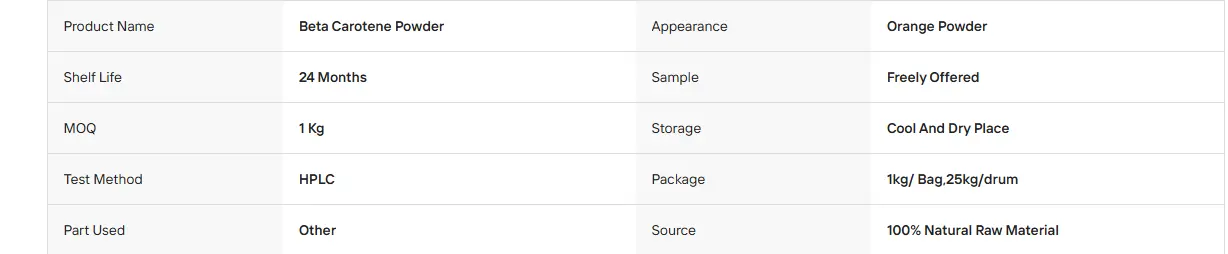
The ability to manufacture things deserves a close look. Our plant uses advanced continuous counter-current extraction technology to make sure that the process is well controlled and runs smoothly. This high-tech infrastructure backs up our promise of zero batch-to-batch variation, which sets our Beta-Carotene Powder 96 apart from competitors whose quality changes cause problems in later manufacturing steps.
After-sales support structures show that a supplier wants to work with you as a partner, not just as a customer. Our specialised team sets up order tracking tools that let us see what's going on during the fulfilment process. Quick response to questions makes sure that they are answered the same day, which helps clients when they need technical help or help with coordinating logistics during the product integration phases.
Addressing Common Concerns and Ensuring Safe Use
To use ingredients responsibly, you need to know about their safety ratings, your legal responsibilities, and how to solve problems with applications. The information below addresses common worries that formulation and quality teams have.
Safety Profile and Precautions
Beta-carotene is considered safe at nutritional intake levels and is regulated more flexibly than preformed vitamin A due to its self-regulating conversion to retinol. However, high-dose intake in heavy smokers is associated with increased lung cancer risk, requiring clear warning labels. Pregnant users should consult healthcare professionals. Labeling must comply with regulations such as FDA 21 CFR 73.95 and EU Novel Food requirements, supported by accurate nutritional claims and regulatory guidance.
Application Troubleshooting Strategies
Stability issues can occur despite established processes. Loss of efficacy should be investigated through packaging integrity, storage conditions, and formulation compatibility. Beta-Carotene Powder 96 is sensitive to oxygen, so even minor packaging defects accelerate oxidation; nitrogen flushing during sealing helps extend shelf life. Color variation may result from storage or formulation differences and is minimized by consistent processing conditions. Dissolution issues can be addressed through pre-dispersion, micronization, or microencapsulation, supported by formulation guidance.
Conclusion
Beta-Carotene Powder 96 is a high-tech material that makers can use when they need a reliable source of vitamin A that is also very pure and consistent. Understanding the right way to use this pharmaceutical-grade material, from figuring out the right amount to making it more stable, helps formulators get the most out of its performance. Strategies for buying things that focus on checking certifications, evaluating suppliers, and managing inventory strategically protect quality standards while lowering costs. Our dedication to high-quality production, quick response times, and full technical support make us a reliable partner for all of your ingredient needs in the pharmaceutical, beauty, and nutraceutical industries.
FAQ
1.What is the recommended dosage of Beta-Carotene Powder 96 for dietary supplement formulations?
The usual amount of vitamin A added is between 5 and 30 milligrams per serving. This is based on how much vitamin A activity is wanted and the 12:1 conversion ratio set by government rules. Dosing depends on the product's positioning and the type of people it's meant for.
2.How does Beta-Carotene Powder 96 compare in cost and quality to lower-purity grades?
Even though the price per kilogram seems higher, the real cost of the active ingredient is usually lower for 96% material because it has twice as much concentration as 50% grades. The value proposition is strengthened even more by quality consistency and formulation advantages.
3.What certifications should I verify when sourcing Beta-Carotene Powder 96?
Important certifications include being registered with the FDA, having ISO22000 for food safety management, and, if needed, religious dietary certifications like KOSHER and HALAL. Ask for up-to-date Certificates of Analysis for each batch that show tests for purity, heavy metals, and microbiology.
Partner with UNIWELL as Your Trusted Beta-Carotene Powder 96 Supplier
UNIWELL offers Beta-Carotene Powder 96 that is safe for use in pharmaceuticals. They have all the necessary certifications and have been making this product for ten years. Our modern continuous counter-current extraction technology makes sure that there is no difference from batch to batch. This solves the consistency problems that make formulation processes further down the line more difficult. We keep more than 100 metric tonnes of strategic inventory on hand, so we can ship standard orders within three business days and keep your production schedules running smoothly.
Our team knows what women's health supplement brands, menopause support developers, and hormonal balance formulation specialists need in order to do their jobs well. We offer custom ODM/OEM services that help you navigate regulatory settings from idea to market-ready solutions, whether you're making high-potency softgels, functional foods with added nutrients, or high-end cosmetic preparations.
Email our committed team at info@uniwellbio.com to ask for certified samples, talk about bulk prices, or find out more about how we can make your order unique. As a dependable Beta-Carotene Powder 96 producer with global shipping solutions, we can help you improve your product lines by providing you with high-quality ingredients and quick support as a partner.
References
1. Tanumihardjo, S.A. (2013). "Provitamin A Carotenoids: Biological Conversion and Assessment of Efficacy." Journal of Food Science, 78(Suppl 1), A1-A8.
2. Grune, T., Lietz, G., Palou, A., Ross, A.C., Stahl, W., Tang, G., & Biesalski, H.K. (2010). "Beta-Carotene as a Source of Vitamin A." Molecular Nutrition & Food Research, 54(9), 1179-1197.
3. Burri, B.J., & La Frano, M.R. (2017). "Beta-Carotene and Human Health: A Review of Current Research." Nutrition Research, 47, 1-12.
4. Britton, G., Liaaen-Jensen, S., & Pfander, H. (2008). Carotenoids Volume 4: Natural Functions. Basel: Birkhäuser Verlag.
5. Rodriguez-Amaya, D.B., & Kimura, M. (2004). HarvestPlus Handbook for Carotenoid Analysis. Washington DC: International Food Policy Research Institute.
6. Mayne, S.T. (1996). "Beta-Carotene, Carotenoids, and Disease Prevention in Humans." FASEB Journal, 10(7), 690-701.
Have a project in mind? Share your requirements — we’ll turn your ideas into reliable products.
 Powder.webp)