- English
- French
- German
- Portuguese
- Spanish
- Russian
- Japanese
- Korean
- Arabic
- Greek
- German
- Turkish
- Italian
- Danish
- Romanian
- Indonesian
- Czech
- Afrikaans
- Swedish
- Polish
- Basque
- Catalan
- Esperanto
- Hindi
- Lao
- Albanian
- Amharic
- Armenian
- Azerbaijani
- Belarusian
- Bengali
- Bosnian
- Bulgarian
- Cebuano
- Chichewa
- Corsican
- Croatian
- Dutch
- Estonian
- Filipino
- Finnish
- Frisian
- Galician
- Georgian
- Gujarati
- Haitian
- Hausa
- Hawaiian
- Hebrew
- Hmong
- Hungarian
- Icelandic
- Igbo
- Javanese
- Kannada
- Kazakh
- Khmer
- Kurdish
- Kyrgyz
- Latin
- Latvian
- Lithuanian
- Luxembou..
- Macedonian
- Malagasy
- Malay
- Malayalam
- Maltese
- Maori
- Marathi
- Mongolian
- Burmese
- Nepali
- Norwegian
- Pashto
- Persian
- Punjabi
- Serbian
- Sesotho
- Sinhala
- Slovak
- Slovenian
- Somali
- Samoan
- Scots Gaelic
- Shona
- Sindhi
- Sundanese
- Swahili
- Tajik
- Tamil
- Telugu
- Thai
- Ukrainian
- Urdu
- Uzbek
- Vietnamese
- Welsh
- Xhosa
- Yiddish
- Yoruba
- Zulu
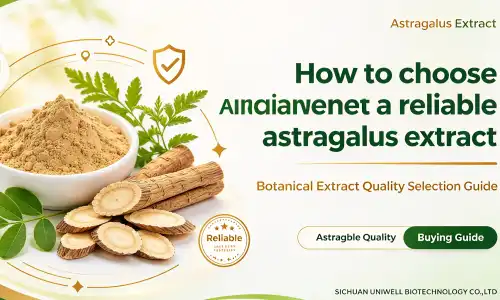
How to choose a reliable astragalus extract
Choosing a reliable provider of astragalus extract can’t be based only on the product brochures. Procurement experts in animal feed manufacturing, livestock nutrition, aquaculture, and biotech industries are increasingly pressured to source botanical ingredients that fulfil stringent quality requirements while maintaining production timelines and regulatory compliance. The worldwide astragalus root extract market has grown fast owing to the growing demand for immune-boosting feed additives and functional compounds. However, this rise is not without its concerns, including variable polysaccharide content, opaque supply chains, and the potential for adulteration that threaten animal health outcomes and brand image. Reliable supplier choice means bioactive potency that can be relied upon and consistent batch-to-batch stability and adherence to certifications like FDA, ISO22000, KOSHER, and HALAL. This book uses a methodical choice framework to assist you in choosing suppliers that combine scientific rigour with operational excellence that ultimately protects your formulas and enhances your competitive position in North American and worldwide markets.
Understanding the Decision Scenario: Why Quality Astragalus Extract Matters
Astragalus membranaceus has been widely explored for its immunomodulatory polysaccharides and astragalosides, substances that boost stress resistance, immune cell function, and promote antioxidant defences. These bioactives have been shown to increase feed conversion ratios, decrease illness incidence, and help maintain gut integrity in cattle, poultry, swine, aquaculture species, and companion animals in animal nutrition. The botanical’s adaptability goes beyond feed into nutraceutical supplements, cosmetic serums that address oxidative stress, and clinical recovery formulae that help reduce inflammatory cytokines.
But there are several sourcing challenges that procurement teams face. Variability in raw materials between roots cultivated organically and by conventional methods influences polysaccharide production and profiles of contaminants. Extraction methods, from water-based decoctions to alcohol-solvent approaches, provide extracts with varying solubility, colour, and bioavailability. Adulteration is still a problem, with unscrupulous providers often adding exogenous starches or dextrins to extracts in order to artificially boost assayed polysaccharides. Dietary ingredient requirements vary between the U.S. DSHEA framework and EU Novel Food criteria, especially for highly pure isolates like cycloastragenol, making it more difficult due to regional restrictions. This knowledge helps procurement personnel match supplier capabilities with application needs so that immune-support claims and formulation stability stand up to scrutiny from tough third-party audits and customers.
Establishing Core Quality Metrics for Astragalus Extract Selection
The first step in quality assurance is the explicit definition of bioactive markers. Standardised extracts need set amounts of active compounds—polysaccharides are evaluated by UV spectrometry and astragaloside IV by HPLC—while ratio extracts (e.g. 10:1) show concentration but not effectiveness. UNIWELL Our Astragalus Extract Powder contains Astragalus Polysaccharides at 70% UV and Astragaloside IV above 0.2% for consistent dosage needed for accurate formulation. Astragalus membranaceus (Fisch) Bge. var. mongholicus, as a light yellow fine powder, is gently spray-dried or air-dried in a 100,000-grade cleanroom environment to avoid oxidative degradation and retain thermosensitive chemicals.
Certificates of Analysis and Third-Party Validation
All good suppliers provide a Certificate of Analysis that indicates the identification has been confirmed by HPTLC fingerprinting, assay findings, and contamination screens. Heavy metal limitations should be confirmed by third-party labs consistent with USP and EU regulations (lead < 3.0 mg/kg, arsenic < 1.0 mg/kg, cadmium < 1.0 mg/kg, mercury < 0.1 mg/kg). Microbial tests must be performed to ensure total plate counts of <1,000 CFU/g, yeast and mould of <100 CFU/g, and no presence of pathogens including E. coli, Salmonella, and Staphylococcus aureus. Pesticide Residue Testing by GC-MS/LC-MS (Meets USP <561> or EU Regulation 396/2005) – Protect organic certificates and export permits. UNIWELL’s extracts are rigorously tested by third parties for purity, potency and heavy metals and are certified by FDA, KOSHER, HALAL, and ISO22000, which eases regulatory submissions in different markets.
Extraction Technology and Form Factor Considerations
The extraction process has a great impact on the product qualities. The continuous counter-current extraction method allows for more efficient solvent use and less heat exposure, providing extracts with more consistent colour and less batch-to-batch variability. Polysaccharide-rich powders are water-soluble and may be easily included in liquid feed supplements and aquaculture premixes. However, they may have a brownish colour that is not compatible with clear drinks. On the other hand, astragaloside-concentrated extracts are poorly soluble in water and hence are more suitable for encapsulation or tablet matrices. The form factors vary from tinctures and liquid concentrates to spray-dried fine powders with exceptional flowability. In the feed industry, producers want powders that are non-GMO, devoid of additives, mix well with the basic ingredients, and do not cake during storage. The right extraction profile and form size enable easy integration into current manufacturing processes and label-claim accuracy throughout shelf life.
Analyzing Supplier Reliability and Market Reputation
A supplier’s credibility is determined by its manufacturing capacity, maturity of quality standards, and supply chain resilience. Operational resilience of a company is shown in its capacity to manage bulk orders from 25-kilogram pilot batches to multi-ton contracts without impacting lead times or standards. We have a strategic reserve of raw materials of one hundred metric tonnes, which allows us to deliver typical orders in an average of three working days. The inventory in this buffer helps to offset the risks of seasonal swings in harvest and demand, especially during peak production times or when there are unanticipated interruptions in supply.
Manufacturing Excellence and Quality Control
High-quality control does not only include testing of the finished product but also verification of incoming raw materials, monitoring throughout manufacturing, and stability studies after production. All production takes place in FDA-registered, ISO22000-certified facilities that comply with Good Manufacturing Practices, including avoidance of contamination, equipment calibration, and traceability processes. UNIWELL has more than 10 years of production experience and a comprehensive understanding of botanical extractions, including astragalus extract. Its technical team can solve formulation problems and advise on the best storage conditions, such as keeping the relative humidity below 60% to avoid hygroscopic caking in high-polysaccharide grades. Transparent documentation, including batch records and stability data, aids regulatory filings and due diligence audits by procurement teams.
Market Positioning and Client Testimonials
Top suppliers build a reputation for reliability and responsiveness to customer service. Client references from animal nutrition businesses, agricultural biotech companies and commodities wholesalers give peer confirmation of product dependability and service responsiveness. Transparent pricing models illuminate cost drivers—raw material quality levels, extraction complexity, certification premiums—enabling informed discussions devoid of hidden surcharges. UNIWELL offers exceptional value, assured quality, and unrivalled batch-to-batch consistency with reasonable pricing through their vertically integrated model from cultivation to extraction. Knowing a supplier’s role in the global botanical extract ecosystem, whether as a vertically integrated producer, contract manufacturer or trading middleman, helps buyers evaluate supply chain security and intellectual property protection for unique formulations.
Matching Astragalus Extract Options to Your Business Needs
Different applications need different product specs. Animal feed formulators demand extracts that are stable to the pelleting temperatures, resistant to rancidity over long-term storage, and bioavailable in target species. The concern of aquaculture feed manufacturers is water-dispersible powders that may reduce leaching loss and help to balance the gut microbiota of shrimp and fish larvae. Nutraceutical makers are trying to standardise astragalus polysaccharide to work with multicomponent immune formulas that comprise vitamin C, zinc, and echinacea, where chemical stability and synergistic strength improve effectiveness. Cosmetic producers want highly pure extracts, devoid of odour and colour fluctuation, compounded into topical serums that penetrate skin barriers without sensitisation.
Volume Flexibility and Customization Capabilities
Procurement amounts might range from sample orders for R&D trials to bulk contracts for continued manufacturing runs. Flexible MOQs from suppliers allow startups to validate formulae, while experienced manufacturers may scale commercial production. UNIWELL offers full ODM/OEM services with unique extraction ratios from 10:1 concentrated powders to 50% polysaccharide standardisations and synergistic immune support blends with complementary botanicals such as ginseng or licorice. Brand distinction may be achieved by proprietary ingredient declarations and market-specific paperwork, such as USP/EP monograph compliance and Novel Food dossiers for EU entry, with private labelling possibilities. Co-development collaborations employ UNIWELL’s regulatory knowledge to help set ingredient requirements in the target nation, from GRAS affirmation in the U.S. to Traditional Herbal Registration in the U.K., therefore speeding time-to-market and lowering compliance risk.
Application-Specific Recommendations
Feed additive applications benefit from non-GMO, additive-free powders that are made under strong microbiological controls, enabling pathogen-free incorporation into premixes and compound feeds. Clinical recovery nutrition must be of medical-grade purity, with confirmed freedom from allergens and excipients, kosher and halal certified to provide inclusive market access. Cosmetic compositions need decolourized extracts or low-concentration mixes that retain antioxidant action without discolouring emulsions. Meeting extract criteria with end-use technical needs including solubility, particle size distribution and moisture content is a critical step that includes shelf-life testing to assure label claim integrity and avoid downstream processing problems.
Best Practices for Final Evaluation and Long-Term Supplier Partnership
If you are going to commit to a botanical astragalus extract source, do your homework. Samples of the product and their technical data sheets (TDS) and safety data sheets (SDS) allow for a practical examination of organoleptic qualities, solubility characteristics, and formulation compatibility. The pilot-scale testing replicates the circumstances in a true production environment and shows possible problems such as mixing homogeneity, heat sensitivity, or contact with other ingredients. To prevent suppliers from overestimating or inadvertently drifting in quality, potency claims and contaminant profiles are analytically validated by independent labs.
Contract Negotiation and Documentation
Transparent contracts define requirements, acceptable tolerance ranges, delivery timelines, payment conditions, and quality assurances. Product returns, batch rejections, and corrective action procedures clauses safeguard the customer from defective shipments. Flexible supply agreements can adjust to changes in volume and seasonal demand spikes, and vendor-controlled inventory arrangements may help smooth unpredictability in lead times. UNIWELL has a specialised supply chain staff that responds quickly to any questions and ensures your purchase and logistics go smoothly. Worldwide logistic services (sea, air and land freight) together with full export paperwork (commercial invoices, phytosanitary certificates, customs declarations) give you compliant and efficient exports to any destination.
Continuous Improvement and Regulatory Vigilance
Botanical extract markets are changing with new knowledge, changing customer tastes, and regulatory changes. The discovery of new extraction methods such as supercritical CO2 or enzymatic hydrolysis might result in savings or better bioavailability. Being aware of regulatory environments such as the FDA Botanical Guidance updates or EU Novel Food evaluations allows for potential reformulation and documentation improvements. Open communication is the key to long-term supplier collaborations, with technical assistance extending beyond order fulfilment to include collaborative troubleshooting, formulation optimisation and market information sharing. UNIWELL's pre-sales technical assistance provides application guidance and preliminary regulatory advice for target markets, and continued after-sales follow-up includes order monitoring and rapid resolution of comments or problems.
Conclusion
Securing a reputable astragalus extract supplier is not just a transactional procurement; it is a strategic relationship that underlies product effectiveness, regulatory compliance, and brand reputation. Procurement specialists manage the inherent risks of botanical supply chains by methodical evaluation of quality parameters, supplier infrastructure, and application fit. Trusted suppliers set themselves apart from opportunistic vendors by providing standardised bioactive content, rigorous third-party testing, certifications from FDA to ISO22000, and transparent production methods. With over a decade of production experience, state-of-the-art continuous counter-current extraction technology, and strategic inventory reserves, UNIWELL offers zero batch-to-batch variation and quick fulfilment to allow animal nutrition companies, biotech innovators, and commodity wholesalers to confidently scale formulations. Diligent supplier screening and pilot testing are investments that provide consistent quality, supply chain resilience, and long-term cost management.
FAQ
1. What differentiates a 10:1 ratio extract from a standardized astragalus extract?
A 10:1 ratio indicates concentration—ten kilograms of raw root yield one kilogram of extract—but guarantees no specific bioactive level. Standardized extracts, such as 70% polysaccharides, specify fixed percentages of active compounds verified via UV or HPLC, ensuring consistent potency critical for reproducible efficacy in finished goods and regulatory label claims.
2. How can I verify supplier authenticity and prevent adulteration?
Request HPTLC fingerprinting against botanical reference standards to confirm species identity. Conduct HPLC analysis for astragaloside IV and enzymatic tests to detect exogenous starch spiking. Third-party lab validation of Certificates of Analysis and on-site facility audits provide additional assurance against economic adulteration.
3. Are organic astragalus extracts worth the premium for B2B applications?
Organic certification eliminates synthetic pesticide residues, appealing to premium nutraceutical brands and export markets with stringent residue limits. The cost premium—typically 15-30%—reflects rigorous cultivation oversight and certification audits. Feed and industrial applications may prioritize conventionally grown extracts with robust residue testing, balancing cost efficiency with safety compliance.
Partner with UNIWELL: Your Trusted Astragalus Extract Manufacturer
UNIWELL Biotechnology specializes in high-purity astragalus extract for animal feed, nutraceutical, and biotech applications. Our Astragalus Extract Powder, standardized to 70% polysaccharides and exceeding 0.2% astragaloside IV, is manufactured in a 100,000-grade cleanroom under FDA, ISO22000, KOSHER, and HALAL certifications. With over ten years of production expertise, we leverage continuous counter-current extraction technology to eliminate batch variation and meet stringent European and American standards. Our strategic inventory of over one hundred metric tons enables three-day standard order fulfillment, while comprehensive ODM/OEM customization tailors formulations to your precise market requirements. Free samples and competitive pricing support your formulation development. Contact us at info@uniwellbio.com to request a Certificate of Analysis, discuss your procurement needs, and discover why leading livestock nutrition companies and botanical extract suppliers trust UNIWELL for reliable, compliant, high-quality astragalus extract.
References
1. Zhang, W. D., & Chen, H. (2018). Pharmacological Effects and Clinical Applications of Astragalus membranaceus: A Systematic Review. Journal of Ethnopharmacology, 235, 212-228.
2. Li, X., Qu, L., Dong, Y., Han, L., Liu, E., Fang, S., & Wang, T. (2014). A Review of Recent Research Progress on the Astragalus Genus. Molecules, 19(11), 18850-18880.
3. Auyeung, K. K., Han, Q. B., & Ko, J. K. (2016). Astragalus membranaceus: A Review of its Protection Against Inflammation and Gastrointestinal Cancers. The American Journal of Chinese Medicine, 44(1), 1-22.
4. Fu, J., Wang, Z., Huang, L., Zheng, S., Wang, D., Chen, S., & Wei, S. (2014). Review of the Botanical Characteristics, Phytochemistry, and Pharmacology of Astragalus membranaceus. Phytotherapy Research, 28(9), 1275-1283.
5. Sinclair, S. (1998). Chinese Herbs: A Clinical Review of Astragalus, Ligusticum, and Schizandrae. Alternative Medicine Review, 3(5), 338-344.
6. Cho, W. C., & Leung, K. N. (2007). In Vitro and In Vivo Immunomodulating and Immunorestorative Effects of Astragalus membranaceus. Journal of Ethnopharmacology, 113(1), 132-141.
Have a project in mind? Share your requirements — we’ll turn your ideas into reliable products.